“ What, ho! cried he to the chief judge, walking up to him, and standing before him, and speaking to him with a loud clear voice. What ho! captain Robert Sewall! why do ye this thing? What ho, there! addressing himself to the foreman of the jury—why speed ye so to the work of death? and you, master Bailey! and you governor Phips! and you doctor Mather, what business have ye here? And you ye judges, who are about to become the judges of life and death, how dare ye! Who gave you power to measure and weigh such mystery? Are ye gifted men—all of you—every man of you—specially gifted from above? ”
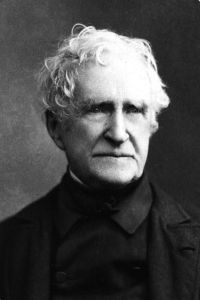
John Neal
Summary
Published in 1828, Rachel Dyer by John Neal is a Gothic historical novel that reimagines the Salem witch trials through the fictional character of Rachel Dyer and the historical figure of George Burroughs. Merging fact with fiction, it critiques Puritan legalism, the mistreatment of Indigenous peoples, and the conflict between Old World customs and American republicanism.
Neal’s vivid use of dialect and his nationalist perspective, highlighted by the provocative “Unpublished Preface,” elevate the work as a foundational text in early American literature, its themes of injustice and resistance resonating with later writers like Hawthorne. The novel’s emphasis on martyrdom and the use of spectral evidence remains a powerful reflection of 17th-century hysteria and the enduring moral questions it raises.
Quotes from Rachel Dyer (John Neal)
“ For shame! cried Burroughs. Why rebuke his levity, when if we are to put faith in what you say, ye are preparing to over-reach the Evil One himself? You must play a sure game, (for it is a game) if you hope to convict him of treachery in a case, where according to what you believe, his character is at stake.Brother Burroughs!Brother Willard!Forbear, I beseech you.I shall not forbear. If the woman is a witch, how do you hope to surprise her? ... to entrap her? ... to convict her? And if she is not a witch, how can she hope to go free? None but a witch could escape your toils. ”
“ Would not the man of Europe make war now like a savage, and without mercy, if he were beset by a foe—for such was the foe that Philip of Mount Hope had to contend with in the fierce pale men of Massachusetts Bay,—a foe that no weapon of his could reach, a foe coming up out of the sea with irresistible power, and with a new shape? What if armies were to spring up out of the solid earth before the man of Europe—it would not be more wonderful to him than it was to the man of America to see armies issuing from the deep. ”
