“ Paris loves to wander there on Sundays; to scatter floral symbols of a living memory on the youngest graves, and to hang wreaths of unfading honour over the ashes of those who have fought for it and served it. The memory of the dead soon fades, they say, yet you will see men and women of Paris, on many a summer’s day, take flowers and wreaths in solemn pity to lay on the tomb of a woman who was dust seven hundred years ago. It is the grave of Heloise, and of her lover, Abélard. ”
Summary
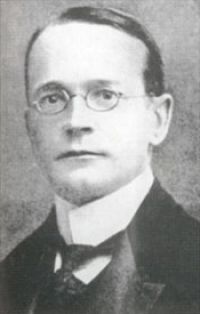
“Peter Abélard”, is a work by Joseph McCabe. It explores elements such as Abélard, Bernard and Heloise.
Quotes from Peter Abélard (Joseph McCabe)
“ Blending with other and not alarming sensuous feelings, veiling itself, and gently, subtly passing its sweet fire into the veins, the coming of love is unperceived until it is already strong to exert a numbing influence on the mind. Abélard awoke one day to a consciousness that a large part of the new sweetness that pervaded his life was due to the birth of a new power in his soul—a power as elusive to recognition as it is imperious in its demands. ”
“ With Abélard lingering at Paris in his light-hearted way, the violence and energy of Bernard swept away whatever support he might have counted on at Rome. Throughout the curia Bernard had scattered his caricature of Abélard: a lawless monk, an abbot who neglected his abbey, a man of immoral life, an associate of the recognised enemies of the papacy, already condemned for heresy, a reviver of Arius and Nestorius and Pelagius, a teacher without reverence, a disturber of the faith of the simple. ”
“ The scene of the next act in Abélard’s dramatic career is a bright, restful valley in the heart of Champagne. It is the summer of 1122, and the limpid Arduzon rolls through enchantingly in its course towards the Seine. In the meadow beside it are two huts and a small oratory, rudely fashioned from the branches of trees and reeds from the river, and daubed over with mud. No other sign of human presence can be seen. Abélard and one companion are the only human beings to be found for miles. ”
“ There can be little doubt that the optimism of Chateaubriand has for once come nearer to the truth than the cynicism of Bayle. The decadent admirers of Heloise forget three circumstances which should have diminished their equivocal adoration: the letter is from a wife to her husband, from a penitent to her spiritual guide—women say such things every day in the confessional, even in this very sensitive age—from a thoughtful woman to a man whom she knew to be dead to every breath of sensual love. ”
“ Marriage was fast becoming a fatal obstacle to advancement in the ecclesiastical world; a lover—with wealth—was not a serious difficulty. Even this point, however, cannot be pressed; it looks as though his ambition had become as limp and powerless as all other feelings in the new tyranny of love. Historians have been so eager to quarrel with the man that they have, perhaps, not paid a just regard to the fact that Heloise herself was violently opposed to marriage, and conscientiously thought their earlier union more honourable. ”
“ However, just as Abélard was about to enter on the last stage of the conflict, he was recalled to Pallet by his mother.The eleventh century had witnessed a strong revival of the monastic spirit. When men came at length to feel the breath of an ideal in their souls, the sight of the fearful disorder of the age stimulated them to the sternest sacrifices. They believed that he who said, ‘If thou wilt be perfect, go and sell that thou hast, and give to the poor,’ was God, that he meant what he said, and that he spoke the message to all the ages. ”
“ No other personality that we may choose to study leads to so clear and true an insight into those strange days as does that of the luckless Breton philosopher. It was the time of transition from the darkest hour of mediæval Europe to a period of both moral and intellectual brilliance. The gloom of the ‘century of iron’ still lay on the land, but it was already touched with the faint, spreading dawn of a new idealism. There is, amongst historians, a speculation to the effect that the year 1000 of the Christian era marked a real and very definite stage in the history of thought. ”
“ If Abélard attempts to shirk it at the last moment, he ‘will follow him all over the world.’ He finally dies away in an outburst of childish rage which beats Abélard’s peroration. He will not continue any longer because it occurs to him that Abélard is, by the strictest force of logic, a nonentity. He is not a monk, for he is giving lessons; he is not a cleric, for he has parted with the soutane; he is not a layman, for he has the tonsure; he is not even the Peter he signs himself, for Peter is a masculine name.These were the two ablest thinkers of Christendom at the time. ”
“ Abbot Suger’s autobiography is a piece of vulgar and crude self-advertisement beside it. It has not the mere chance immortality which honours such works as that of Suger, and which is wholly due to the zeal of the modern collector of ancient documents; it has the germ of immor [p. 222] tality within it—the same soul that lives in the Confessions of Augustine: those who understand that soul will not add the Confession of Rousseau. And the confession of Abélard has this singular feature: it is written by a man to whom the former sinful self is dead in a way which was impossible to Augustine. ”
“ It was not uncommon in those ‘Dark Ages’ for a young noble to resign the comfort of the château and the glamour of a courtly life in this way. The scholastic fever, which was soon to inflame the youth of the whole of Europe, had already set in. You could not travel far over the rough roads of France without meeting some foot-sore scholar, making for the nearest large monastery or episcopal town. ”
“ A most industrious study of the few works of Aristotle and of the Roman classics that were available, a retentive memory, an ease in manipulating his knowledge, a clear, penetrating mind, with a corresponding clearness of expression, a ready and productive fancy, a great knowledge of men, a warmer interest in things human than in things divine, a laughing contempt for authority, a handsome presence, and a musical delivery—these were his gifts. ”
“ The multiplication of churches has made the Bernardist [p. 334] notion of faith wholly untenable and unserviceable to Rome. Reason precedes faith; reason must lead men to faith, and make faith acceptable to men. That is the gospel that now falls on the dead ear of the great master.And when we pass from this fundamental principle or attitude to a consideration of special points of dogma we again meet with many a triumph. We have already seen how Abélard’s ‘novelties’ may be traced to a twofold criticism—ethical and intellectual—of the form in which Christian dogmas were accepted in his day. ”
“ If you stated the problem clearly to a hundred men and women who were unacquainted with philosophic speculations, ninety-nine of them would probably answer that these universals were neither mere words nor external realities, but general or generalised ideas—composite photographs, to use the interesting comparison of Mr. Galton, in the camera of the mind. That was the profound discovery with which Abélard shattered the authority of his master, revolutionised the thought of his age, and sent his fame to the ends of the earth. ”
“ The Arabs of Spain were no enemies of Christ. Only a most perverse idea [p. 200] of their state could make an able thinker and teacher thus regard a life amongst them as a matter of ultimate and desperate resort. Had they but conquered Europe, materially or morally, half the problems that still harass it—or ought to do—would have been solved long ago. It is pathetic to find Abélard speculating whether the hatred of the Christians for him will not make his path easier to the favour of the Arabs, by producing in them an impression that he had been unfaithful to Christian dogma. ”
“ Thousands there were who could close heart and home at the fiery word of a preacher, and go to starve their souls in the living tomb of a monastery. Thousands could cast down their spades and their wine-cups, and rush to meet death in the trail of a frenzied hermit. [1] They were the days of the travail of the spirit; and they rise before us in arresting vision when we look into the life of Peter Abélard. ”
“ Abélard had long looked forward to the hour of his appearance before the Council. It was to be an hour of supreme triumph. The papal legate and the archbishop in their resplendent robes in the sanctuary; the circle of bishops and abbots and canons; the crowd of priests, theologians, [p. 158] masters, and clerics; the solemn pulpit of the cathedral church, from which he should make his highest effort of dialectics and oratory; the scattered rivals, and the triumphant return to his pupils. ”
“ In any case, there was an increasingly large class of youths and men who clamoured for ‘human and philosophic grounds,’ as he puts it, who would lie to their consciences if they submitted to the current pietism. Abélard believed he would render valuable service to the Church if he could devise rational proofs, or at least analogies, of its dogmas. It was in this frame of mind, not in a spirit of destructive scepticism, that he raised the standard of rationalism. He at once applied his force to the most preterrational of dogmas, and wrote his famous Treatise on the Unity and Trinity of God. ”
“ For if there is a seeming peace about the few months of life that still remained to the great teacher, it is the peace of the grave—the heavy peace that shrouds a dead ambition and a broken spirit, not the glad peace that adorns requited labour and successful love. ”
“ If it seems incredible that Heloise should have penned the letters which bear her name, how shall we qualify the supposition that there lived, some time within [p. 230] the following century, a genius capable of creating them, yet utterly unknown to his contemporaries? If they are the work of some admirer of Abélard, as Orelli thinks, they reveal a higher literary competency than Rousseau shows in his Nouvelle Heloïse. We are asked to reject a wonder in the name of a greater wonder. ”
“ What standard of conduct shall be used in judging Abélard? There are a thousand moral codes—that of the Hindu and that of the Christian, that of the twelfth century and that of the twentieth. In the twelfth century even the St. Bernards thought it just that a man who could not see the truth of the Church’s claims should be burned alive, and his soul tortured for all eternity; that a Being was just and adorable who tortured a twelfth century babe for Adam’s [p. 88] sin; that twelfth century Jews might be robbed because their remote ancestors had put Christ to death ”
“ Indeed, in his scorn of the orthodox position, he contemptuously declared them to be ‘mere words’; neither in the world of reality, nor in the mind itself, was there anything corresponding to them; they were nothing but an artifice of human speech. Europe was ablaze at once. St. Anselm assailed the heretic from the theological side; William of Champeaux stoutly led the opposition, and the defence of [p. 28] realism, from the side of philosophy. Such was the question of the hour, such the condition of the world of thought, when Pierre Abélard reached the cloistral school at Paris. ”
“ Abélard’s life had until now been purely spiritual, almost wholly intellectual. His defects were spiritual—conceit and ambition; if, as men assure us, it is a defect to recognise that you have a supra-normal talent, and to strive for the pre-eminence it entitles you to. The idealist spirit in which he had turned away from the comfort and quiet of the château had remained [p. 80] thus far the one fire that consumed his energy. In the pretty theory of Plato, his highest soul had silenced the lower, and reduced the lowest to the barest requisite play of vegetative life. ”
“ He has still the old enthusiasm for reason and for the deepening and widening of our natural knowledge. Both knowledge and faith come from God, and cannot contradict each other. It was the last gleam of the dying light, but it was wholly unchanged in its purity.With the approach of spring the abbot sent the doomed man to a more friendly and familiar climate. Cluny had a priory outside the town of Chalon-sur-Saône, not far from the bank of the river. It was one of the most pleasant situations in Burgundy, in the mild valley of the Seine, which Abélard had learned to love. ”
“ When we proceed to examine the erudition which gave occasion to the epitaph, ‘to him alone was made clear all that is knowable,’ we must bear in mind the limitations of his world. When Aristotle lent his mind to the construction of a world system, he had the speculations of two centuries of Greek thinkers before him; when Thomas of Aquin began to write, he had read the thoughts of three generations of schoolmen after Abélard, and all the Arabic translations and incorporations of Greek thought. At the beginning of the twelfth century there was little to read beside the fathers. ”
“ There are men whose soul is so absorbed in study or in contemplation that love never reaches their consciousness; or if it does, its appeal is faint, and quickly rejected. The condition of such a life, highly prized as it is by many, is constant intellectual strain.Abélard had now arrived at a point when the mental strain began instinctively to relax. Wealth would inevitably bring more sensuous pleasure into his life. ”
“ Moreover, the theologian admits that every part and particle of the dogmatic system must meet the criticism of reason. In the positive sense it is indispensable that reason prove the existence of God, the authority of God, and the divinity of the Scriptures. In the negative sense, no single dogma must contain an assertion which is clearly opposed to a proved fact or to a clear pronouncement of human reason or the human conscience. These are not the speculations of advanced theologians, but the current teaching in the Roman schools and manuals [38] of dogmatic theology. ”
“ The Cistercian had summed up Abélard’s misdeeds thus in his letter to the pope: ‘He peers into the heavens and searches the hidden things of God, then, returning to us, he holds discourse on ineffable things of which a man may not speak.’ In the very sense in which this was said of Abélard, it may be urged as a chief characteristic of the saintly schoolmen of the thirteenth century. Even St. Bonaventure was no mystic in the anti-rational sense of Bernard; simply, he applied to theology the reason of Plato instead of the reason of Aristotle. ”
“ Without explicitly formulating it, Abélard proceeded on the principle which is now complacently laid down by the Catholic theologian, and was accepted by the Christian world at large a century or half a century ago: the principle that what is offered to us as revealed truth must be tested by the declarations of the mind and of the conscience. The intellectual criticism led him to alter the terms of the dogmas of the Trinity, the Incarnation, the Eucharist, and others; the ethical criticism led him to modify the current theories of original sin, the atonement, penance, and so forth. ”
“ It is a matter of faith in the Roman Catholic Church to-day that no man shall enter heaven who has not a belief in a personal God, at least; many theologians add the narrower qualification of a literal acceptance of the Trinity. But Abélard tempered his audacity by proving that his favourite heathens had this qualification of a knowledge of the Trinity, probably under the inspiration of St Augustine. ”
“ The popular notions of heaven and hell and deity are travesties of true Christian teaching. God, as a purely spiritual being, is the supreme good, and heaven is an approach to Him by obedience; hell, isolation from Him. When we remember that Abélard had before him only the works of the fathers and such recent speculations as those of Anselm, we shall surely recognise the action of a mind of the highest order in these debates.The second work was not less remarkable. It was a collection of sentences from the fathers on points of dogma. ”
“ He drove Abélard from the house, and raised the usual futile barriers to the torrent of passion. Whether the canon was really more earnest than the majority of his order, and therefore sincerely shocked at the thought of the liaison, or whether it had disturbed some other project he had formed, it is impossible to say. Heloise herself, in her sober maturity, affirms that any woman in France would have thought her position more honourable than any marriage. However that may be, Fulbert angrily forbade a continuance of the relation. ”
“ The abbey had not been reformed since 994, so that human nature had had a considerable period in which to assert itself. The preceding abbot, Ives I., was accused at Rome of having bought his dignity in a flagrant manner. The actual abbot, Adam, is said by Abélard to have been ‘as much worse in manner of life and more notorious than the rest as he preceded them in dignity.’ It is certainly significant that the Benedictine historian of the abbey, Dom Félibien, can find nothing to put to the credit of Adam, in face of Abélard’s charge, except a certain generosity to the poor. ”
“ In point of sober fact, we rely almost exclusively on Abélard’s autobiography for the details of his earlier career, and he tells us nothing of his childhood, and not much of his youth. It matters little. The life of a soul begins when it looks beyond the thoughts of parents and teachers—if it ever do—out into the defiant world, and frames a view and a purpose.The home from which Abélard issued, somewhere about the year 1095, was an ancient castle at Pallet, in Brittany, about eleven miles to the south-east of Nantes. ”
Common terms
Similar works
Historia Calamitatum (Peter Abelard…Christian Schools and Scholars…Beacon Lights of History, Volume 3 part 1…Beacon Lights of History, Volume 05…Illustrations of the History of Medieval Thought and Learning…Burgundy: The Splendid Duchy. Stories and Sketches in South Burgundy…The Early Irish Monastic Schools…Somerset Historical Essays (Joseph Armitage Robinson…The Story of Paris (Thomas Okey…Paris and Its Story (Thomas Okey…
