Summary

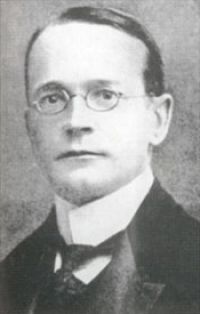
Portrait of Joseph McCabe Joseph McCabe The War and the Churches

It is just as easy to state our situation in terms of reason as in terms of sentiment: it would not be easy to say in which guise it is ugliest. Let us talk no more nonsense about needing religion to help us to get rid of this atrocious nightmare. It drives both reason and sentiment to the brink of insanity. Both protest against it with every particle of their energy. Why Christianity failed to protest against it in fifteen hundred years may or may not be obscure; but there is no obscurity whatever about the probable effect on militarism and war of a cultivation of reason and sympathy.
Source: Gutenberg

Portrait of Joseph McCabe Joseph McCabe The War and the Churches (1915)

One would imagine that the great majority of the clergy conceived him as standing aside, for some inscrutable reason, and letting wicked men deploy their perverse forces. When the triumph comes, gilding the past sacrifices or driving them from memory, God will be on every lip. The whole nation will be implored to come and kneel before the altars. Royalty and nobility and military, judges and stockbrokers and working men—above all, a surging, thrilling, ecstatic mass of women—will gather round the clergy, and will avow that they see the finger of God in this glorious consummation.
Source: Wikisource

Portrait of Joseph McCabe Joseph McCabe The War and the Churches (1915)

We have relegated to the Middle Ages, to which it belongs, the notion that the criminal is a man who has affronted society, and that society may take a revenge on him. In the sane conception of our time the criminal is a mischievous element disturbing the social order, and, in the interest of that order, he must be isolated or put out of existence. It is not the guilt, but the social effect, which we regard. And from this point of view a single great war is far more calamitous than all the crime in Europe during whole decades.
Source: Wikisource

Get perspective with Kwize: daily news enlightened by great literature