Summary

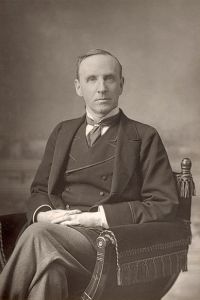
Portrait of John Morley John Morley Critical Miscellanies (Vol. 2 of 3…

Amidst all the demolition upon which its leading minds had been so zealously bent, they had been animated by the warmest love of social justice, of human freedom, of equal rights, and by the most fervent and sincere longing to make a nobler happiness more universally attainable by all the children of men. It was to these great principles that we ought eagerly to turn, to liberty, to equality, to brotherhood, if we wished to achieve before the new invaders a work of civilisation and social reconstruction, such as Catholicism and feudalism had achieved for the multitudinous invaders of old.
Source: Gutenberg

Portrait of John Morley John Morley Critical Miscellanies (Vol. 2 of 3…

Otherwise, each nation is torn into sects; and amid the throng of sects where is unity? ‘To maintain that a crowd of independent churches form a church, one and universal, is to maintain in other terms that all the political governments of Europe only form a single government, one and universal.’ There could no more be a kingdom of France without a king, nor an empire of Russia without an emperor, than there could be one universal church without an acknowledged head.
Source: Gutenberg

Portrait of John Morley John Morley Critical Miscellanies (Vol. 2 of 3…

Yet De Maistre was no ignorant monk. He had no selfish or official interest in taking away the keys of knowledge, entering not in himself, and them that would enter in hindering. The true reasons for his detestation of the eighteenth-century philosophers, science, and literature, are simple enough. Like every wise man, he felt that the end of all philosophy and science is emphatically social, the construction and maintenance and improvement of a fabric under which the communities of men may find shelter, and may secure all the conditions for living their lives with dignity and service.
Source: Gutenberg

Get perspective with Kwize: daily news enlightened by great literature