Summary

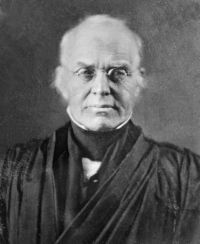
Portrait of Joseph Story Joseph Story Sellers v. Dialogue — Opinion of the Court

We are not at liberty to reject words which are sensible in the place where they occur, merely because they may be thought, in some cases, to import a hardship, or tie up beneficial rights within very close limits. If an invention is used by the public, with the consent of the inventor, at the time of his application for a patent; how can the court say, that his case is, nevertheless, such as the act was intended to protect? If such a public use is not a use within the meaning of the statute, what other use is?
Source: Wikisource

Portrait of Joseph Story Joseph Story Sellers v. Dialogue — Opinion of the Court

The single question then is, whether the charge of the court was correct in point of law. It has not been, and indeed cannot be denied, that an inventor may abandon his invention, and surrender or dedicate it to the public. This inchoate right, thus once gone, cannot afterwards be resumed at his pleasure; for, where gifts are once made to the public in this way, they become absolute. Thus, if a man dedicates a way, or other easement to the public, it is supposed to carry with it a permanent right of user. The question which generally arises at trials, is a question of fact, rather than of law
Source: Wikisource

Portrait of Joseph Story Joseph Story Sellers v. Dialogue — Opinion of the Court

If an inventor should be permitted to hold back from the knowledge of the public the secrets of his invention; if he should for a long period of years retain the monopoly, and make, and sell his invention publicly, and thus gather the whole profits of it, relying upon his superior skill and knowledge of the structure; and then, and then only, when the danger of competition should force him to secure the exclusive right, he should be allowed to take out a patent, and thus exclude the public from any farther use than what should be derived under it during his fourteen years
Source: Wikisource

Get perspective with Kwize: daily news enlightened by great literature