Summary

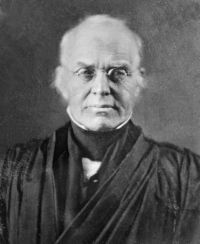
Portrait of Joseph Story Joseph Story Sheppard v. Taylor — Opinion of the Court

Could the success of the owners in that demand revive the already extinct claim of the seamen? Can a lien exist, unless to support and effectuate a claim? Is not in the cases supposed the right or complaint of the owner founded on the reason that he has been prevented from attaining that benefit, which, after deduction of expenses, including of course seamen's wages, would have resulted to him from the voyage? The claim of the seamen being gone, by the fact of the disaster; the recovery can have no respect to it as an incumbent burden on the owners.
Source: Wikisource

Portrait of Joseph Story Joseph Story Sheppard v. Taylor — Opinion of the Court

In respect to the freight, there is more room for argument. That there is an intimate connexion between the freight and the wages; that the right to the one is generally, though not universally, dependent upon the other; is doctrine familiar to all those who are conversant with maritime law: and has given rise to the quaint expression, that freight is the mother of wages. Indeed, freight being the earnings of the ship in the course of the voyage, it is the natural fund out of which the wages are contemplated to be paid
Source: Wikisource

Portrait of Joseph Story Joseph Story Sheppard v. Taylor — Opinion of the Court

The 'safety of the ship,' another branch of the maxim, is not essential to the claim of wages; because they are awarded even where the ship has been condemned, if the cargo be restored. The true principle of the seamen's right to wages must be, that they contract to serve to insure the safety of the ship; to bring the res safe into the hands of her owners: for which the owners are to pay, if no vis major shall occur to take the vessel out of their hands, or break up the voyage; the wages-claim being incident to the ship and the voyage, and not to the freight.
Source: Wikisource

Get perspective with Kwize: daily news enlightened by great literature