Summary

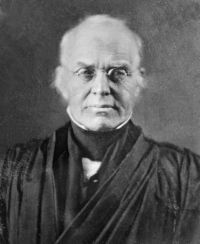
Portrait of Joseph Story Joseph Story Pettit v. Vasse — Opinion of the Court

It is not universally, though it may ordinarily be one test of right, that it may be enforced in a Court of Justice. Claims and debts due from a sovereign, are not ordinarily capable of being so enforced. Neither the King of Great Britain, nor the government of the United States, is suable in the ordinary Courts of Justice, for debts due by either. Yet, who will doubt, that such debts are rights? It does not follow, because an unjust sentence is irreversible, that the party has lost all right to justice, or all claim, upon principles of public law, to remuneration.
Source: Wikisource

Portrait of Joseph Story Joseph Story Pettit v. Vasse — Opinion of the Court

The justice of a claim, and its assignable properties, are totally distinct, both from the question of its present or future character, and from the nature and even existence of a remedy. The assignable character of a thing depends on nothing technical, or choses in action would not pass. But upon the existence of right, abstracted from the consideration of present or future enforcement, or the susceptibility of enforcement at all, from the possible want of a precise remedy.
Source: Wikisource

Portrait of Joseph Story Joseph Story Pettit v. Vasse — Opinion of the Court

In respect to a descent cast, after the bankruptcy, it is manifest, that nothing could pass by any antecedent assignment of the commissioners.
The heir, during the lifetime of his ancestor, has no right, claim, title, or interest, in the ancestral estate. It is a mere naked expectancy, liable to be defeated at the will of the ancestor at all times; and in no just sense, a possibility of interest, a right in the thing itself. The other words, 'reverting to, or become vested' in the bankrupt, require a like interpretation.
Source: Wikisource

Get perspective with Kwize: daily news enlightened by great literature