Summary

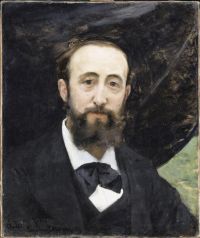
Portrait of Jules Claretie Jules Claretie Prince Zilah — Volume 1

There was no need for the name of Prince Andras Zilah—or, as they say in Hungary, Zilah Andras—to have been written in characters of blood in the history of his country, for one to divine the hero in him: his erect figure, the carriage of his head, braving life as it had defied the bullets of the enemy, the strange brilliance of his gaze, the sweet inflections of his voice accustomed to command, and the almost caressing gestures of his hand used to the sword—all showed the good man under the brave, and, beneath the indomitable soldier, the true gentleman.
Source: Gutenberg

Portrait of Jules Claretie Jules Claretie Prince Zilah — Volume 1

Her beauty, faded by long, slow sorrow, Tisza found again in her child, a true daughter of Hungary like herself; and, as Marsa grew up, she told her the legends, the songs, the heroism, the martyrdom, of Hungary, picturing to the little girl the great, grassy plain, the free puszta, peopled with a race in whose proud language the word honor recurs again and again.
Marsa grew up in the Muscovite castle, loving nothing in the world except her mother, and regarding with frightened eyes the blond stranger who sometimes took her upon his knees and gazed sadly into her face.
Source: Gutenberg

Portrait of Jules Claretie Jules Claretie Prince Zilah — Volume 1

Andras knew what a powerful superstition is attached by the people of Hungary to these deep lakes of Tatra, the "eyes of the sea," where, say the old legends, the most beautiful carbuncle in the world lies hidden, a carbuncle which would sparkle like the sun, if it could be discovered, and which is guarded by frogs with diamond eyes and with lumps of pure gold for feet. He felt more touched than astonished at the superstition of the Tzigana, and at the offer which, the evening before, Prince Sandor had refused with a smile.
Source: Gutenberg

Get perspective with Kwize: daily news enlightened by great literature