Summary

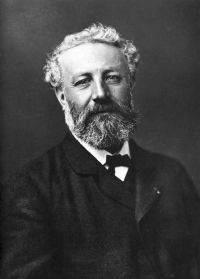
Portrait of Jules Verne Jules Verne Hector Servadac (Frewer translation… (1906)

The temperature of the hall, now entirely exposed to the outer air, was rapidly falling, and would quickly become unendurable. Far too intense was the cold to allow any one to remain at the opening, and the moisture on the walls soon resolved itself into icicles. But the mountain was like the body of a dying man, that retains awhile a certain amount of heat at the heart after the extremities have become cold and dead. In the more interior galleries there was still a certain degree of warmth, and hither Servadac and his companions were glad enough to retreat.
Source: Wikisource

Portrait of Jules Verne Jules Verne Hector Servadac (Frewer translation… (1906)

Would not the lava-cinders exhumed from the extinct volcano be their last poor resource?
“Keep up your spirits, my friends,” said Servadac, “we have plenty of time before us at present. Let us hope that as fresh difficulties arise, fresh ways of escape will open. Never despair!”
“True,” said the count; “it is an old saying that `Necessity is the mother of invention.' Besides, I should think it very unlikely that the internal heat will fail us now before the summer.”
The lieutenant declared that he entertained the same hope.
Source: Wikisource

Portrait of Jules Verne Jules Verne Hector Servadac (Frewer translation… (1906)

It was not a time to be fastidious; they must be satisfied with such accommodation as they could get, provided it was warm. Captain Servadac was only too glad to find that his hopes about the temperature were to a certain extent realized. The lower they went, the greater was the diminution in the cold, a diminution that was far more rapid than that which is experienced in making the descent of terrestrial mines. In this case it was a volcano, not a colliery, that was the object of exploration, and thankful enough they were to find that it had not become extinct.
Source: Wikisource

Get perspective with Kwize: daily news enlightened by great literature