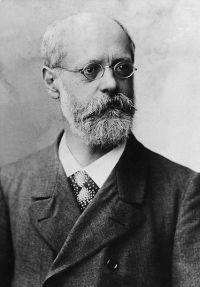
Karl Johann Kautsky

Karl Johann Kautsky

Summary

Portrait of Karl Johann Kautsky Karl Johann Kautsky The Social Revolution (1902)

When I speak here of war as a means of revolution, that does not say that I desire war. Its horrors are so terrible that to-day it is only military fanatics whose ghastly courage could lead them to demand a war in cold blood. But even when a revolution is not a means to an end but an end in itself, which even at the most bloody price could not be too dearly purchased, still one cannot desire war as a means to release revolution for it is the most irrational means to this end.
Source: Wikisource

Portrait of Karl Johann Kautsky Karl Johann Kautsky The Social Revolution (1902)

It is true that the governmental power will cease to be a class organ, but will it not still be the organ of a majority? Can the intellectual life be made dependent upon the decisions of the majority? Would not every new truth, every new conception and discovery be comprehended and thought out by the insignificant minority? Does not this new order threaten to bring at once the best and keenest of the intellectual thinkers in the various spheres into continuous conflict with the proletarian regime?
Source: Wikisource

Portrait of Karl Johann Kautsky Karl Johann Kautsky The Social Revolution (1902)

It must always be one of the aims of the thinking proletariat to deprive the possessing classes of the monopoly of culture. It is self-evident that the new regime would increase and improve the schools and pay their teachers better. But we would go still further. To be sure the victorious proletariat, no matter how radically minded it may be, cannot at a single stroke abolish class differences, for these have risen from many centuries of development and these causes and their results are not swept away as easily as a chalk mark is wiped from a slate with a sponge.
Source: Wikisource

Get perspective with Kwize: daily news enlightened by great literature