“ The Skeezers are not bad people; they do not care to quarrel and fight, even with their enemies the Flatheads; but they are so cowed and fearful of Coo-ee-oh that they obey her slightest word, rather than suffer her anger." "Hasn't she any heart, then?" asked Dorothy. "She never displays mercy. She loves no one but herself," asserted Lady Aurex, but she trembled as she said it, as if afraid even yet of her terrible Queen. "That's pretty bad," said Dorothy, shaking her head gravely. "I see you've a lot to do here, Ozma, in this forsaken corner of the Land of Oz. ”
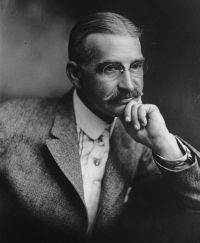
L. Frank Baum
Summary

Published in 1920, Glinda of Oz is the final novel in L. Frank Baum’s original Oz series, concluding a saga that redefined American children’s literature. This installment follows Princess Ozma and Dorothy as they journey to end a war between the Skeezers and Flatheads, only to become trapped on a submerged island after the villainous Queen Coo-ee-oh loses her magical powers.
The narrative shifts to Glinda, the Sorceress, who must gather allies to rescue her friends and restore harmony to the Land of Oz. Themes of enchantment, leadership, and the vulnerability of authority run throughout the story, underscored by Baum’s vivid worldbuilding and moral reflections on duty and self-sacrifice. As the last work of the original series, it captures the lasting magic of Oz while hinting at the difficulties of its continuation after Baum’s death.
Quotes from Glinda of Oz (L. Frank Baum)
“ Yes, dear, because I can use my fairy powers to make others happy. Had I no kingdom to rule, and no subjects to look after, I would be miserable. Also, you must realize that while I am a more powerful fairy than any other inhabitant of Oz, I am not as powerful as Glinda the Sorceress, who has studied many arts of magic that I know nothing of. Even the little Wizard of Oz can do some things I am unable to accomplish, while I can accomplish things unknown to the Wizard. This is to explain that I'm not all-powerful, by any means. My magic is simply fairy magic, and not sorcery or wizardry. ”
“ If every one could wave a wand and have his wants fulfilled there would be little to wish for. There would be no eager striving to obtain the difficult, for nothing would then be difficult, and the pleasure of earning something longed for, and only to be secured by hard work and careful thought, would be utterly lost. There would be nothing to do, you see, and no interest in life and in our fellow creatures. That is all that makes life worth our while—to do good deeds and to help those less fortunate than ourselves." "Well, you're a fairy, Ozma. Aren't you happy?" asked Dorothy. ”
