Summary

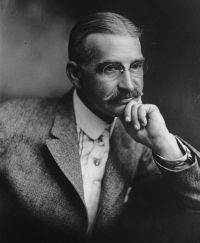
Portrait of L. Frank Baum L. Frank Baum The art of decorating dry goods windows and interiors (1900)

The designer describes this effect as follows:
“In describing the window as seen through the plate glass, one can easily imagine he is looking at a bit of nature, only in a miniature form. In the foreground, moored to a dock, is seen a gondola, majestically rising and falling upon an effect that looks precisely like a deep, clear body of water, with a slow, even motion so perfect that it is impossible to determine when it begins or stops. In the distance old Vesuvius is belching fire and lava, which looks so real it is hard to believe it is only an illusion.”
Source: Gutenberg

Portrait of L. Frank Baum L. Frank Baum The art of decorating dry goods windows and interiors (1900)

Each man must, by practice and study, work out the various details of draping for himself, for the graceful folds we so often see and admire cannot really be taught. If you ask a trimmer what his method is for making a certain effective draping, he will stare at you in bewilderment and say, “Why—why, I just give it a push here, and a twist there, and a yank sideways—and it’s done.” As a matter of fact, he don’t know how he does it, any more than a painter can tell you what particular sweep of the brush created his masterpiece.
Source: Gutenberg

Portrait of L. Frank Baum L. Frank Baum The art of decorating dry goods windows and interiors (1900)

A little ingenuity, a little taste, an idea of the harmony of colors can do wonders in the interior of any store, no matter what the character of the stock may be, or its quality or quantity. The thing to do is to let your goods tell some clear, legible story that shall be as plain to your customers as was the handwriting on the wall of Belshazzar’s palace to Daniel, the prophet.
Source: Gutenberg

Get perspective with Kwize: daily news enlightened by great literature