Summary

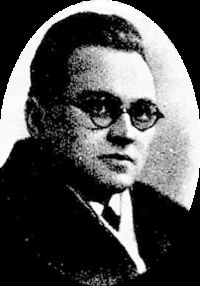
Portrait of Leo Wiener Leo Wiener The History of Yiddish Literature in the Nineteenth Century

His sympathies are with humanity at large, and the Jews are but one of the units that are to be redeemed from the social slavery under which the wretched of the world groan. It is those who have become timid under oppression of whatsoever form, who have lost the power of thinking, who have developed only the power of suffering, who are saints without knowing it, that Perez loves best. To them he would restore the human rights so long withheld from them, not by political and social enfranchisement, but by a consciousness of their human dignity which must precede all reform.
Source: Gutenberg

Portrait of Leo Wiener Leo Wiener The History of Yiddish Literature in the Nineteenth Century

It is only an unfortunate accident, the persecutions of the Jews, that has thrown him into so unpromising a field as that of Judeo-German letters, where to be great is to be unknown to the world at large and to be subjected to the jealous attacks of less gifted writers. He could easily gain a reputation in any other language, should he choose to try for it, but, like many of his predecessors, he is pursued by the merciless allurements of the Jewish Muse. Her enchantment is the more powerful on her devotees since she appears to them only in the garb of their own weaving.
Source: Gutenberg

Portrait of Leo Wiener Leo Wiener The History of Yiddish Literature in the Nineteenth Century

There is not an act they perform that is not followed by endless superstitious rites, in which the beliefs of Chaldea are inextricably mixed with French, Germanic, or Slavic ceremonies. To pierce the dense cloud of superstition that has involved the Mosaic Law, to disentangle the ancient religion from the rank growth of the ages, to open the eyes of the Jews to the realities of this world, and to break down the timeless and spaceless sphere of their imaginings—that has been the task of the followers of the Mendelssohnian Reform for the last one hundred years.
Source: Gutenberg

Get perspective with Kwize: daily news enlightened by great literature