Summary

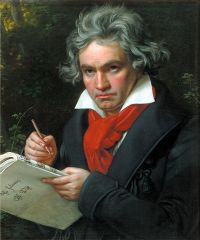
Portrait of Ludwig van Beethoven Ludwig van Beethoven Beethoven's Letters 1790-1826, Volume 2

True art is imperishable, and the true artist feels heartfelt pleasure in grand works of genius, and that is what enchants me when I hear a new composition of yours; in fact, I take greater interest in it than in my own; in short, I love and honor you. Were it not that my continued bad health prevents my going to see you in Paris, with what exceeding delight would I discuss questions of art with you! Do not think that this is merely intended to serve as an introduction to the favor I am about to ask of you.
Source: Gutenberg

Portrait of Ludwig van Beethoven Ludwig van Beethoven Beethoven's Letters 1790-1826, Volume 2

I will send a few lines to that contemptible creature, Schindler, though I am most unwilling to have anything to do with such a wretch. If we could write as quickly as we think and feel, I could say a great deal not a little remarkable; but for to-day I can only add that I wish a certain Carl may prove worthy of all my love and unwearied care, and learn fully to appreciate it.
Though not certainly exacting, as you know, still there are many ways in which we can show those who are better and nobler than ourselves that we acknowledge their superiority.
Source: Gutenberg

Portrait of Ludwig van Beethoven Ludwig van Beethoven Beethoven's Letters 1790-1826, Volume 2

I know no duty more sacred than the education and training of a child. The chief duties of a guardian consist in knowing how to appreciate what is good, and in adopting a right course; then alone has proper attention been devoted to the welfare of his ward, whereas in opposing what is good he neglects his duty.
Indeed, keeping in view what is most for the benefit of the boy, I do not object to the mother in so far sharing in the duties of a guardian that she may visit her son, and see him, and be apprised of all the measures adopted for his education
Source: Gutenberg

Get perspective with Kwize: daily news enlightened by great literature