Summary

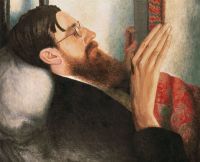
Portrait of Lytton Strachey Lytton Strachey Eminent Victorians — Florence Nightingale (1918)

Lord Stratford, Lord Raglan, Lady Stratford, Dr. Andrew Smith, Dr. Hall, the Commissary-General, the Purveyor—she fulminated against them all. The intolerable futility of mankind obsessed her like a nightmare, and she gnashed her teeth against it. "I do well to be angry," was the burden of her cry. How many just men were there at Scutari? How many who cared at all for the sick, or had done anything for their relief? Were there ten? Were there five? Was there even one? She could not be sure.
At one time, during several weeks, her vituperations descended upon the head of Sidney Herbert himself.
Source: Wikisource

Portrait of Lytton Strachey Lytton Strachey Eminent Victorians — Florence Nightingale (1918)

For years Sidney Herbert saw Miss Nightingale almost daily, for long hours together, corresponding with her incessantly when they were apart; and the tongue of scandal was silent; and one of the most devoted of her admirers was his wife. But what made the connection still more remarkable was the way in which the parts that were played in it were divided between the two. The man who acts, decides, and achieves; the woman who encourages, applauds, and—from a distance—inspires:—the combination is common enough; but Miss Nightingale was neither an Aspasia nor an Egeria.
Source: Wikisource

Portrait of Lytton Strachey Lytton Strachey Eminent Victorians — Florence Nightingale (1918)

Every one knows the popular conception of Florence Nightingale. The saintly, self-sacrificing woman, the delicate maiden of high degree who threw aside the pleasures of a life of ease to succour the afflicted, the Lady with the Lamp, gliding through the horrors of the hospital at Scutari, and consecrating with the radiance of her goodness the dying soldier's couch—the vision is familiar to all.
Source: Wikisource

Get perspective with Kwize: daily news enlightened by great literature