Summary

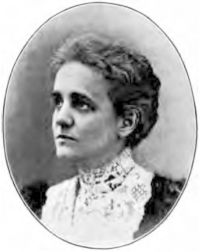
Portrait of Martha Foote Crow Martha Foote Crow Harriet Beecher Stowe: a biography for girls (1913)

In a little saucer-like valley of the lower Berkshires, where the hills stand about in a wide circle, lies that most beautiful of Connecticut villages, Litchfield. Here Harriet Beecher Stowe was born. There was not a day when she and her brothers and sisters did not run to the window to see that blue rim of hills, and even when they were grown into women and men they did not forget the charm of their early home in the mountains.
Source: Gutenberg

Portrait of Martha Foote Crow Martha Foote Crow Harriet Beecher Stowe: a biography for girls (1913)

If she were a man, she cried, she would go and she believed she could take good care of at least one window.
By this time Mrs. Stowe had gained some practical knowledge of what the slavery system really meant. When she had been but one year in Cincinnati she had gone with friends to visit a plantation across the river. Here she had seen a happy prosperous slave life, under owners that seemed to be the sincere well-wishers of the negroes who served them. There was little to shock or distress her in what she saw. Most of the day she moved about as one in a dream.
Source: Gutenberg

Portrait of Martha Foote Crow Martha Foote Crow Harriet Beecher Stowe: a biography for girls (1913)

For nearly a week the kitchen was as busy as an ant-hill. The fat was prepared to fry the doughnuts, the spices were pounded, the flour was sifted, the materials for the flips were collected. Catherine was assisted by eleven-year-old Mary; William, Edward and George split and brought in an incredible amount of wood for the oven, and the girls sat all the evening about the kitchen fire stoning raisins, with the best story-teller in the midst to make the time pass—and she, we are sure, could have been none other than Harriet.
Source: Gutenberg

Get perspective with Kwize: daily news enlightened by great literature