Summary

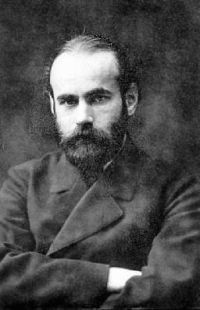
Portrait of Max Wertheimer Max Wertheimer Laws of Organization in Perceptual Forms

I stand at the window and see a house, trees, sky.
Theoretically I might say there were 327 brightnesses and nuances of colour. Do I have "327"? No. I have sky, house, and trees. It is impossible to achieve "327 " as such. And yet even though such droll calculation were possible and implied, say, for the house 120, the trees 90, the sky 117 -- I should at least have this arrangement and division of the total, and not, say, 127 and 100 and 100; or 150 and 177.
The concrete division which I see is not determined by some arbitrary mode of organization lying solely within my own pleasure;
Source: Wikisource

Portrait of Max Wertheimer Max Wertheimer Laws of Organization in Perceptual Forms

The natural grouping (cf., e.g., (i) , (ii) , etc.) is not at all impeded by increasing the number of dots. It never occurs, for example, that with a long row of such dots the process of "uniting" them into pairs is abandoned and individual points seen instead. It is not true that fewer stimulus points " obviously " yield simpler, surer, more elementary results.
In each of the above cases that form of grouping is most natural which involves the smallest interval. They all show, that is to say, the predominant influence of what we may call The Factor of Proximity.
Source: Wikisource

Portrait of Max Wertheimer Max Wertheimer Laws of Organization in Perceptual Forms

If we consider the literal reception of stimuli upon the retina, how often are right angles as such involved? Certainly less often than the perception of right angles. As a matter of fact the conditions necessary for a literal "right angle" stimulation are realized but rarely in everyday life (viz. only when the table or other object appears in a frontal parallel plane) . Hence the argument from experience is referring. not to repetition of literal stimulus conditions, but to repetition of phenomenal experience and the problem therefore simply repeats itself.
Source: Wikisource

Get perspective with Kwize: daily news enlightened by great literature