Summary

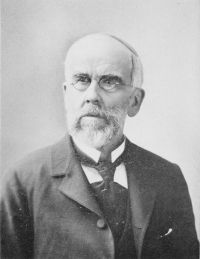
Portrait of Moses Clark White Moses Clark White The Chinese Language Spoken at Fuh Chau (1862)

Chinese Tones. The greatest obstacle to the acquisition of the spoken dialects or languages of China, is peculiar application of the tones, which distinguish words having otherwise the same orthography. It is believed that the tones are not in themselves very difficult, but as they are absolutely essential to the spoken language, and require constant attention to nice distinctions, which are never noticed in other languages, they demand all the attention the student can bestow, to remember always the proper tone of each word, and to enunciate it correctly in speaking.
Source: Wikisource

Portrait of Moses Clark White Moses Clark White The Chinese Language Spoken at Fuh Chau (1862)

In English, various tones or inflections of the voice are used to give force and animation to language; but in Chinese, the tone is an essential part of the word in all circumstances; while rhetorical effect is given to discourse by accentuation, rapidity or slowness of utterance, and peculiarities of manner, as well as varieties of pitch of the voice, and gesticulation.
Source: Wikisource

Portrait of Moses Clark White Moses Clark White The Chinese Language Spoken at Fuh Chau (1862)

The great difference between the smooth and harsh tones, which are variable in different stanzas of Chinese poetry, some of which can be scarcely, if at all, enunciated in singing, renders it almost impossible to sing Chinese poetry with Western music, and a tune which was adapted to one stanza would not be appropriate for the next, though agreeing with it in the number and metrical arrangement of its syllables.
Source: Wikisource

Get perspective with Kwize: daily news enlightened by great literature