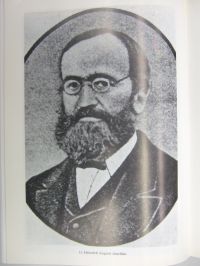
H. A. Jäschke

H. A. Jäschke

Summary

Portrait of H. A. Jäschke H. A. Jäschke Tibetan Grammar (1883)

Peculiarities of the Tibetan article. 1. What have been called Articles by Csoma and Schmidt, are a number of little affixes: པ་ བ་ མ་ པོ་ བོ་ མོ་, and some similar ones, which might perhaps be more adequately termed denominators, since their principal object is undoubtedly to represent a given root as a noun, substantive or adjective, as is most clearly perceptible in the instance of the roots of verbs, to which པ་ or བ་ impart the notion of the Infinitive and Participle, or the nearest abstract and nearest concrete nouns that can possibly be formed from the idea of a verb.
Source: Gutenberg

Portrait of H. A. Jäschke H. A. Jäschke Tibetan Grammar (1883)

The subject of a transitive verb, in Tibetan, assumes regularly the form of the instrumental, of a neuter verb that of the nominative which is the same as the accusative. Thus, ངས་ཁྱོད་རྡུང་ is properly: [41] རྡུང་ a beating happens, ཁྱོད་ regarding you, ངས་ by me = I beat you. In common life the object has often the form of the dative, ཁྱོད་ལ་, to facilitate the comprehension. But often, in modern talk as well as in the classical literature, the acting subject, if known as such from the context, retains its Nominative form.
Source: Gutenberg

Portrait of H. A. Jäschke H. A. Jäschke Tibetan Grammar (1883)

This is in the written language entirely like the Infinitive ཡིན་པ་ ‘being’, གཏོང་བ་ ‘giving’, བཏང་བ་ ‘having given’.—2. Whether the meaning is active or passive, however, can only be inferred from the context, e.g. བཏང་བའི་དངུལ་ is of course ‘the money given’, but དངུལ་བཏང་བའི་མི་ ‘the man having given, or, that has given, the money’; the Tibetan participle means nothing but that the action or condition is connected in some way with a person or thing. But it is natural that in the present participle the active idea should be the more frequent one, as well as in the preterit the passive.—3.
Source: Gutenberg

Get perspective with Kwize: daily news enlightened by great literature