“ An initial at the beginning of a chapter or other text requires nicety of spacing and justification. In modern practice the use of initials is often overdone, being used in many cases where they might better be omitted. Before the invention of typography, and since, the initial letter has been considered the feature of a page that could be used for decorative purposes. Early manuscripts show many elaborate, beautifully colored initials done by artists and illuminators. It was the custom of early printers to leave blank spaces in their printed pages for initials to be drawn in later. ”
Initial
Definition and stakes
An initial, the first letter of a word or name, holds significance in acronyms and typography, often emphasized as a capital letter. Historically, it developed from calligraphic traditions, where elaborate beginnings decorated manuscripts, reflecting both artistic and symbolic roles.
Philosophers like Hegel and Russell examined abstract ideas of universals and individuality, mirroring the initial's function as a representative symbol. Modern typography, however, risks excessive use, diminishing its uniqueness. The relationship between form and meaning—whether in text or thought—reveals the initial's dual role as both a structural component and a conceptual foundation.
Quotes about “initial”
 Georg Wilhelm Friedrich Hegel,
The Logic of Hegel
Georg Wilhelm Friedrich Hegel,
The Logic of Hegel
“ And the unutterable,—feeling or sensation,—far from being the highest truth, is the most unimportant and untrue. If I say 'The individual,' 'This individual,' 'here,' 'now,' all these are universal terms. Everything and anything is an individual, a 'this,' and if it be sensible, is here and now. ”
G. W. F. Hegel, The Phenomenology of Mind — Introduction
“ This dialectic process which consciousness executes on itself—on its knowledge as well as on its object—in the sense that out of it the new and true object arises, is precisely what is termed Experience. ”
William James, The Principles of Psychology, Volume 1…
“ Again, when we use a common noun, such as man, in a universal sense, as signifying all possible men, we are fully aware of this intention on our part, and distinguish it carefully from our intention when we mean a certain group of men, or a solitary individual before us. In the chapter on Conception we shall see how important this difference of intention is. It casts its influence over the whole of the sentence, both before and after the spot in which the word man is used. ”
 Bertrand Russell,
The Analysis of Mind — Lecture XI: General Ideas and Thought
(1921)
Bertrand Russell,
The Analysis of Mind — Lecture XI: General Ideas and Thought
(1921)
“ Now, if we will annex a meaning to our words, and speak only of what we can conceive, I believe we shall acknowledge that an idea which, considered in itself, is particular, becomes general by being made to represent or stand for all other particular ideas of the same sort. ”
 Josiah Royce,
The World and the Individual, First Series
(1899)
Josiah Royce,
The World and the Individual, First Series
(1899)
“ And, as we have already seen, and in the present lecture shall further illustrate, the relation of partial and total meaning is, at the same time, the relation of any finite will to the expression of the complete intent of that same will. Without contradiction, therefore, you are unable to assert the real Being of any world, unless you conceive that world as the expressed will whose partial momentary embodiment you even now observe, whenever you get any rational idea before your mind. ”
 John Stuart Mill,
A System of Logic, Ratiocinative and Inductive
(1881)
John Stuart Mill,
A System of Logic, Ratiocinative and Inductive
(1881)
“ As applied to individuals, the word Essence, we found, has no meaning, except in connection with the exploded tenets of the Realists; and what the schoolmen chose to call the essence of an individual, was simply the essence of the class to which that individual was most familiarly referred. ”
Georg Wilhelm Friedrich Hegel,
The Logic of Hegel
“ In its abstract terms a Judgment is expressible in the proposition: 'The individual is the universal.' These are the terms under which the subject and the predicate first confront each other, when the functions of the notion are taken in their immediate character or first abstraction. [Propositions such as, 'The particular is the universal,' and 'The individual is the particular,' belong to the further specialisation of the judgment.] ”
Georg Wilhelm Friedrich Hegel,
Science of Logic
(1816)
“ We find the inner ground for this systematisation of judgments in the circumstance that when the Notion, which is the unity of Being and Essence in a comprehensive thought, unfolds, as it does in the judgment, it must reproduce these two stages in a transformation proper to the notion. ”
 James Frederick Ferrier,
Berkeley and Idealism
(1883)
James Frederick Ferrier,
Berkeley and Idealism
(1883)
“ All the secondary qualities, colours, sounds, tastes, smells, heat, hardness, everything, in short, which is an affection of sense, may be generalised at one sweep into our mere knowledge of things. But the primary qualities, which are usually restricted to extension and figure, and which constitute, it is said, the objective or real essence of things, and which are entirely independent of us, into what shall they be generalised? ”
Frank Edgar Farley, An Advanced English Grammar with Exercises
“ Verbs of choosing, calling, naming, making, and thinking may take two objects referring to the same person or thing.The first of these is the direct object, and the second, which completes the sense of the predicate, is called a predicate objective. We chose Oscar president. [Oscar is the direct object of chose; president is the predicate objective.] I call John my friend. They thought the man a coward. Make my house your home. The predicate objective is often called the complementary object or the objective attribute. It is classed as a complement. ”
 William Whewell,
History of scientific ideas
(1858)
William Whewell,
History of scientific ideas
(1858)
“ Without dwelling upon a subject, the discussion of which does not enter into the design of the present work, I may remark that the question whether an à priori proof of the existence of a First Cause be possible, is a question concerning the nature of our Ideas, and the evidence of the axioms which they involve, of the same kind as many questions which we have already had to discuss. Is our Conception or Idea of a First Cause gathered from the effects we see around us? ”
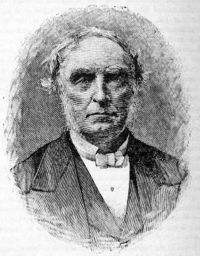 James Legge,
Sacred Books of the East
(1882)
James Legge,
Sacred Books of the East
(1882)
“ We go on to the third Appendix in two sections, being the fifth and sixth 'wings,' and forming what is called 'The Great Treatise.' It will appear singular to the reader, as it has always done to myself, that neither in the Text, nor in the first two Appendixes, does the character called Yî, which gives its name to the classic, once appear. ”
Josiah Royce,
The World and the Individual, First Series
(1899)
“ Yes, it would be to know what the whole individual Being called the World is; and who the Individual of Individuals, namely the Absolute, or God himself, is. Just such final determinateness, just such precision, definiteness, finality of meaning, constitutes that limit of your own internal meaning which our theory will hereafter seek to characterize. ”
 David Hume,
Treatise of Human Nature/Book 1…
(1739)
David Hume,
Treatise of Human Nature/Book 1…
(1739)
“ Having by these divisions given an order and arrangement to our objects, we may now apply ourselves to consider with the more accuracy their qualities and relations. The first circumstance, that strikes my eye, is the great resemblance betwixt our impressions and ideas in every other particular, except their degree of force and vivacity. ”
Josiah Royce,
The World and the Individual, First Series
(1899)
“ Our preference, however, for the objects of sense, for the pen, and the sun, as typical instances of objects of ideas, arises from the fact that in case of just these objects, it is especially easy, by observing, from without, the acts of the person who has these ideas, to form confident and, for common-sense purposes, relatively exact notions of the selection to which the internal meaning of the ideas has bound the maker of any given judgment about objects. ”
Georg Wilhelm Friedrich Hegel,
Science of Logic
(1816)
“ The abstract form of the advance is, in Being, an other and transition into an other; in Essence showing or reflection in the opposite; in Notion, the distinction of individual from universality, which continues itself as such into, and is as an identity with, what is distinguished from it. ”
George Henry Dole, The Philosophy of Creation (1906)
“ Having deduced the conclusion that the Creator, or First Cause, is substance, the inquiry is not as to the real existence of a Creator, but rather as to the character of the Creator. Let us now further consider the attributes of the substantial First Cause. ”
 George Edward Moore,
Principia Ethica — Chapter VI
(1903)
George Edward Moore,
Principia Ethica — Chapter VI
(1903)
“ Connected with the distinction just made between ‘object’ in the sense of the qualities actually before the mind and ‘object’ in the sense of the whole thing which possesses the qualities actually before the mind, is another distinction of the utmost importance for a correct analysis of the constituents necessary to a valuable whole. ”
 Aristotle,
Aristotle's Psychology (On the Soul…
Aristotle,
Aristotle's Psychology (On the Soul…
“ The first point however which demands our attention is to determine in which of the higher classes soul is included and what is its generic character — whether, in other words, it is an individual thing and real substance or a quality or quantity or any other of the categories as they have been distinguished. ”
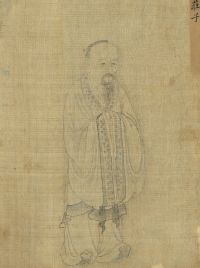 Zhuang Zi,
Chuang Tzŭ
(1889)
Zhuang Zi,
Chuang Tzŭ
(1889)
“ Hence it has been said, By Hui Tzŭ. 'The objective emanates from the subjective; the subjective is consequent upon the objective. This is the Alternation Theory.' Nevertheless, when one is born, the other dies. ”
Charles A. McMurry, The Elements of General Method…
“ Every common noun, verb, adjective, adverb, and preposition is the name of a concept; for example, horse, beauty, to steal, running, over, early, yellow, grape, ocean, etc. To understand these concepts there must be somewhere a progress from the individual to the abstract, an induction from particulars to a general concept. ”
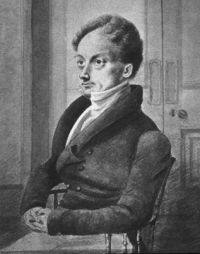 James Mill,
Analysis of the Phenomena of the Human Mind
James Mill,
Analysis of the Phenomena of the Human Mind
“ From this, it necessarily follows, that between none of our ideas is the association more intimate and intense, than between antecedent and consequent, in the order of events. Whenever we perceive an event, the mind instantly flies to its antecedent. I hear words in the street; event: some one, of course, is making them; antecedent. My house is broken, and my goods are gone; event: a thief has taken them; antecedent. This is that remarkable case of association, in which the combination is inseparable; a case of so much importance in explaining some of the more mysterious phenomena of thought. ”
William James, The Principles of Psychology, Volume 1…
“ At bottom the process is one of conception, and is everywhere, even in the sphere of simple sensible qualities, the same as that by which we are usually understood to attain to the notions of abstract goodness, perfect felicity, absolute power, and the like: the direct perception of a difference between compounds, and the imaginary prolongation of the direction of the difference to an ideal terminus, the notion of which we fix and keep as one of our permanent subjects of discourse. ”
Georg Wilhelm Friedrich Hegel,
The Logic of Hegel
“ This realised particularity of the notion is the Judgment.The ordinary classification of notions, as clear, distinct and adequate, is no part of the notion; it belongs to psychology. Notions, in fact, are here synonymous with mental representations; a clear notion is an abstract simple representation: a distinct notion is one where, in addition to the simplicity, there is one 'mark' or character emphasised as a sign for subjective cognition. ”
William James, The Philosophical Review (1892)
“ Now the sort of 'fact of experience' on which in my book I have proposed to compromise, is the so-called 'mental state,' in whose existence not only common men but philosophers have uniformly believed. ”
Josiah Royce,
The Conception of God
(1897)
“ This generalised form of attention, which we attribute to the Absolute Experience, is now conceived by us as that aspect of this Absolute which, in the total movement of the world’s unity, determines the ideas to find this concrete realisation which they do find. ”
Josiah Royce,
The World and the Individual, First Series
(1899)
“ If you ask what manner of partial Being, from the point of view of our Fourth Conception, such abstractly conceived but concretely excluded facts possess, I answer, precisely the fragmentary sort of Being which the consciousness of a specific purpose, that is the consciousness of a particular attentive selection, consciously assigns to them. ”
Clayton Meeker Hamilton, A Manual of the Art of Fiction
“ The features of any object that we contemplate may with intelligent judgment be divided into two classes, according as they are inherently essential, or else merely contributory, to the existence of that object as an individual entity. ”
John Stuart Mill,
A System of Logic, Ratiocinative and Inductive
(1881)
“ If it be remembered that every attribute is grounded on some fact or phenomenon, either of outward sense or of inward consciousness, and that to possess an attribute is another phrase for being the cause of, or forming part of, the fact or phenomenon upon which the attribute is grounded; we may add one more step to complete the analysis. ”
Georg Wilhelm Friedrich Hegel,
The Logic of Hegel
“ It remains to note that such phrases as 'Being and Nothing are the same,' or 'The unity of Being and Nothing'—like all other such unities, that of subject and object, and others—give rise to reasonable objection. ”
E. R. Murray, The Child Under Eight
“ It is our object to make this background as rich and full and orderly as possible, so that whatever is brought to the focus of consciousness shall be set in a relational background, which shall give it meaning ”
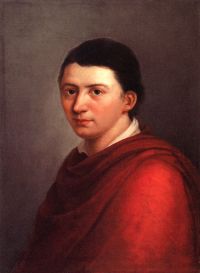 Friedrich von Schlegel,
The philosophy of life, and philosophy of language…
Friedrich von Schlegel,
The philosophy of life, and philosophy of language…
“ We have now taken a general view of the whole human mind, finding it to comprise four great fundamental faculties of the first class, and then certain secondary ones—viz., memory and conscience, with the appetites and external senses, which, at least in the psychological point of view, appear to be mixed forms or derivatives of the former. ”
James Frederick Ferrier,
An Introduction to the Philosophy of Consciousness
(1883)
“ Why, in one instance, do you sign away the reason from the immediate agent, the animal, and fix it upon the Creator, and why in another instance do you confine and attribute it to the immediate agent, the man? ”
 Johann Gottlieb Fichte,
Characteristics of the Present Age
(1806)
Johann Gottlieb Fichte,
Characteristics of the Present Age
(1806)
“ But what Reason itself is, and in what a Life according to Reason consists, and what are the relations which are ordered by Reason in a life so governed by it;—these things have been indeed indicated in many ways, but not yet anywhere placed in a clear light. In our last lecture, however, we said—‘Reason embraces only the One Life, which manifests itself as the Life of the Race. ”
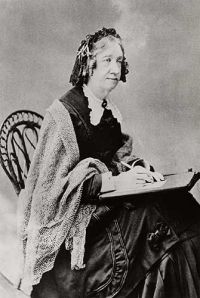 Catharine Esther Beecher,
Common Sense Applied to Religion…
Catharine Esther Beecher,
Common Sense Applied to Religion…
“ If objects are compared in reference to the succession {107} of our conceptions or perceptions, we gain the ideas of such relations as are expressed by the terms firstly, secondly, and thirdly. If objects are compared in reference to the degree of any quality, we gain an idea of such relations as are expressed by the terms brighter, sweeter, harder, louder. If objects are compared in reference to proportion, we gain ideas of such relations as are expressed by the terms an eighth, a half. ”
William Whewell,
History of scientific ideas
(1858)
“ This Idea of a First Cause, and the principle involved in the Idea, have been the subject of discussion in another manner. As we have already said, we assume as an axiom that a First Cause must exist; and we assert that God, the First Cause, exists eternal and immutable, by the necessity which the axiom implies. ”
Josiah Royce,
The World and the Individual, First Series
(1899)
“ But the present, the Third Conception of Being, has amongst all the four conceptions the unique character that it alone, so far as it has more fully come to understand itself, consciously attempts to define the Real as explicitly and only the Universal. ”
P. Coffey, Ontology, or the Theory of Being
“ Since the specific essence is conceived as the most fundamental reality in the thing, and as the seat and source of all the properties and activities of the thing, it is sometimes defined or described, in accordance with this notion of it, as the primary constitutive of the thing and the source of all the properties of the thing. ”
John Stuart Mill,
A System of Logic, Ratiocinative and Inductive
(1843)
“ The student in philosophy will perceive that I allude to the distinction on which so much stress was laid by the schoolmen, and which has been retained either under the same or under other names by most metaphysicians to the present day, viz., between what were called essential, and what were called accidental, propositions, and between essential and accidental properties or attributes. ”
 Friedrich Nietzsche,
Beyond Good and Evil
(1886)
Friedrich Nietzsche,
Beyond Good and Evil
(1886)
“ Whichever groups of sensations within a soul awaken most readily, begin to speak, and give the word of command—these decide as to the general order of rank of its values, and determine ultimately its list of desirable things. ”
 Plato,
The Republic of Plato
(1901)
Plato,
The Republic of Plato
(1901)
“ What classes of things have a greater share of pure existence, in your judgment—those of which food and drink and condiments and all kinds of sustenance are examples, or the class which contains true opinion and knowledge and mind and all the different kinds of virtue? ”
James Gray, Ancient Proverbs and Maxims From Burmese Sources…
“ As applied to books, it is a general term for a treatise which includes maxims, pithy sayings, and didactic stories, intended as a guide to such matters of everyday life as form the character of an individual and influence him in his relations to his fellow-men. ”
James Ward, The Realm of Ends or Pluralism and Theism (1911)
“ On the contrary, the higher, over-individual ends, as they are sometimes called, — politics, industry, science, literature, art — imply a differentiation among men that in spite of its significance would defy classification. ”
