Summary

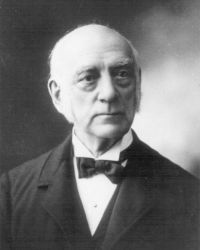
Portrait of James Curtis Hepburn James Curtis Hepburn A Japanese-English and English-Japanese Dictionary (1903)

If the Japanese had confined themselves to a certain number of fixed symbols to represent their syllables, the labor of acquiring a knowledge of their written language would have been comparatively easy; but having such a wide field in the Chinese ideographs from which to select, they have multiplied these symbols, making that which should be simple and plain, complex and confusing, to the great annoyance and trouble of all learners, and not unfrequently even perplexing themselves.
Source: Wikisource

Portrait of James Curtis Hepburn James Curtis Hepburn A Japanese-English and English-Japanese Dictionary (1903)

From this time the Chinese classics, and literature in all its branches, gradually became the study of the higher classes,—of the nobles, military class, priests, and physicians,—and extended more or less even among the farmers and merchants. Education consisted in learning how to read and write Chinese. This has had more influence than all others in directing and shaping the development and civilization of a people, peculiarly impressible, inquisitive, and ready to imitate and adopt whatever may conduce to their own aggrandizement.
Source: Wikisource

Portrait of James Curtis Hepburn James Curtis Hepburn A Japanese-English and English-Japanese Dictionary (1903)

The Chinese written language, without affecting at all the grammatical structure of the native language, has been a vast treasury from which to draw and enrich it with words in every branch of knowledge. Perhaps the great advantage of having such materials at hand from which to form new combinations was never more apparent than at the present time, when the study of western science and institutions, necessitating a new and copious nomenclature and technology, has been entered upon with such avidity. The Chinese ideographs have been found equal to the need.
Source: Wikisource

Get perspective with Kwize: daily news enlightened by great literature