Summary

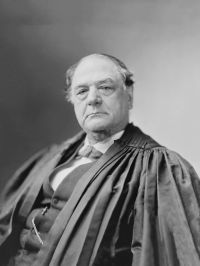
Portrait of Noah Haynes Swayne Noah Haynes Swayne Clements v. Moore Moore — Opinion of the Court

The equity appealed to-while it scans the transaction with the severest scrutiny-looks at all the facts, and giving to each one its due weight, deals with the subject before it according to its own ideas of right and justice. In some instances it visits the buyer with the same consequences which would have followed in an action at law. In others, it allows a security to stand for the amount advanced upon it. In others, it compels the buyer to account only for the difference between the under price which he paid and the value of the property.
Source: Wikisource

Portrait of Noah Haynes Swayne Noah Haynes Swayne Clements v. Moore Moore — Opinion of the Court

The only tendency of proof in an opposite direction is the statements of Nicholson after the assignment, which are no evidence as against Moore, and cannot overcome Nicholson's own sworn answer.
The facts that Nicholson had creditors, and that his means were insufficient to pay them, and that he apprehended suits, and preferred to pay his home creditors, would not, in themselves, prove the fraudulent intention. The man in debt may sell to pay his debts, and he may prefer creditors.
Source: Wikisource

Portrait of Noah Haynes Swayne Noah Haynes Swayne Clements v. Moore Moore — Opinion of the Court

This is the consequence, where his purpose is to aid the seller in perpetrating a fraud upon his creditors, and where he buys recklessly, with guilty knowledge. When the fact of fraud is established in a suit at law, the buyer loses the property without reference to the amount or application of what he has paid, and he can have no relief either at law or in equity.
Source: Wikisource

Get perspective with Kwize: daily news enlightened by great literature