Summary

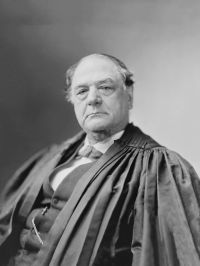
Portrait of Noah Haynes Swayne Noah Haynes Swayne Cornett v. Williams — Opinion of the Court

The court erred in permitting the two depositions of Henry Williams to be read to the jury.
The act of July 2d, 1864, removed the disability of a party to a suit to give evidence in it, and he can now testify orally, as any other witness could at common law; but he cannot testify by deposition, because that mode of taking evidence is in derogation of the common law. The power of examining any witness by deposition is purely statutory; and no statute has yet been made for taking the depositions of parties to suits in their own behalf.
Source: Wikisource

Portrait of Noah Haynes Swayne Noah Haynes Swayne Cornett v. Williams — Opinion of the Court

In such an attitude of the case, for the court to inform the jury that neither the validity nor character of the original debt, nor the question as to whether it was a subsisting and approved claim against the estate, had anything to do with the question of fraud, was practically equivalent to forbidding inquiry at all, or at least restricting it in such a narrow compass as to defeat the object of such inquiry.
Source: Wikisource

Portrait of Noah Haynes Swayne Noah Haynes Swayne Cornett v. Williams — Opinion of the Court

The application of the judgment-creditor and the answer of the administrator gave the judge jurisdiction over the parties and the real estate of the deceased. [17] Jurisdiction is the power to hear and determine. To make the order of sale required the exercise of this power. It was the business and duty of the court to ascertain and decide whether the facts were such as called for that action. The question always arises in such proceedings-and must be determined-whether, upon the case as presented, affirmative or negative action is proper.
Source: Wikisource

Get perspective with Kwize: daily news enlightened by great literature