Summary

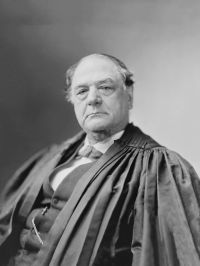
Portrait of Noah Haynes Swayne Noah Haynes Swayne Von Hoffman v. City of Quincy…

Legislative power and control over the public revenue, over the entire subject of taxation, is a fundamental element of sovereignty which must ever remain with the State; a political power to be exercised consistently with the public interests, or necessities, and over which the courts have no jurisdiction. No contract, binding or controlling the legislature as to the collection or appropriation, under revenue laws, of future taxes, can, consistently with the sovereignty of the State, exist.
Source: Wikisource

Portrait of Noah Haynes Swayne Noah Haynes Swayne Von Hoffman v. City of Quincy…

Nothing can be more material to the obligation than the means of enforcement. Without the remedy the contract may, indeed, in the sense of the law, be said not to exist, and its obligation to fall within the class of those moral and social duties which depend for their fulfilment wholly upon the will of the individual. The ideas of validity and remedy are inseparable, and both are parts of the obligation, which is guaranteed by the Constitution against invasion.
Source: Wikisource

Portrait of Noah Haynes Swayne Noah Haynes Swayne Von Hoffman v. City of Quincy…

A right without a remedy is as if it were not. For every beneficial purpose it may be said not to exist.
It is well settled that a State may disable itself by contract from exercising its taxing power in particular cases. [40] It is equally clear that where a State has authorized a municipal corporation to contract and to exercise the power of local taxation to the extent necessary to meet its engagements, the power thus given cannot be withdrawn until the contract is satisfied. The State and the corporation, in such cases, are equally bound.
Source: Wikisource

Get perspective with Kwize: daily news enlightened by great literature