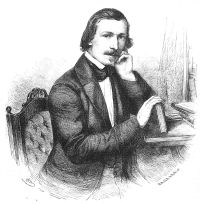
Otto Ule

Otto Ule

Summary

Portrait of Otto Ule Otto Ule,  Popular Science Monthly (1874)

“ The world heard at first with astonishment the saying of a famous scientific man, that, "could man live on air and water alone, such notions as master and servant, prince and subject, friend and foe, hate and love, virtue and vice, right and wrong, etc., would have no existence, and political communities, social and family life, human intercourse, commerce, trade, and industry, art and science—in a word, whatever makes man what he is—depend entirely on the fact that man possesses a stomach and is subject to a law of Nature which compels him daily to take a certain amount of food." ”
Source: Wikisource

Portrait of Otto Ule Otto Ule,  Popular Science Monthly (1874)

“ Of all the influences which determine the life of the individual, and on which his weal and woe depend, undoubtedly the nature of his food is one of the weightiest. Every one has for himself experienced how not only the strength of his muscles, but also the course of his thought and his whole mental tone, is affected by the nature of his food. And shall not that hold good for nations which holds good for individuals? Shall the sum of mankind be less affected in their physical and mental development by the food they take, than the individuals of whom that sum is made up? ”
Source: Wikisource

Portrait of Otto Ule Otto Ule,  Popular Science Monthly (1874)

“ The history of man used to consist of casual events, or of the free and arbitrary doings of individuals. Great men, great heroes, great rulers, great thinkers, determined the history of peoples and of states. Trifling causes—the walling up of a window, or the spilling of a glass of water—might occasion events that would convulse the world. By the aid of natural science we have come to look on the earth as something more than the temporary abode, as the true home and school of mankind. ”
Source: Wikisource

Get perspective with Kwize: daily news enlightened by great literature