Summary

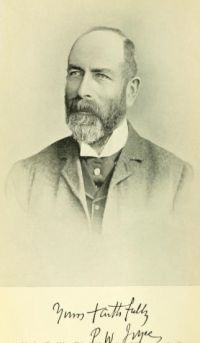
Portrait of P. W. Joyce P. W. Joyce English As We Speak It in Ireland

Many and many a time I heard exhortations from that poor altar, sometimes in English, sometimes in Irish, by the Rev. Darby Buckley, the parish priest of Glenroe (of which Ballyorgan formed a part) , delivered with such earnestness and power as to produce extraordinary effects on the congregation. You saw men and women in tears everywhere around you, and at the few words of unstudied peroration they flung themselves on their knees in a passionate burst of piety and sorrow.
Source: Gutenberg

Portrait of P. W. Joyce P. W. Joyce English As We Speak It in Ireland

Among the old-fashioned and better-educated of our peasantry you will still hear this old pronunciation preserved:—I am very much obleeged to you. It is now generally heard in Kildare among all classes. A similar tendency is in the sound of whine, which in Munster is always made wheen: 'What's that poor child wheening for?' also everywhere heard:—'All danger [of the fever] is now past: he is over his creesis.'
Metathesis, or the changing of the place of a letter or syllable in a word, is very common among the Irish people, as cruds for curds, girn for grin, purty for pretty.
Source: Gutenberg

Portrait of P. W. Joyce P. W. Joyce English As We Speak It in Ireland

When a person looks as if he were likely to die soon:—'He's in the raven's book.' Because when a person is about to die, the raven croaks over the house. (MacCall: Wexford.)
A 'cross' was a small old Irish coin so called from a figure of St. Patrick stamped on it with a conspicuous cross. Hence a person who has no money says 'I haven't a cross.' In Wexford they have the same saying with a little touch of drollery added on:—'There isn't as much as a cross in my pocket to keep the devil from dancing in it.' (MacCall.) For of course the devil dare not come near a cross of any shape or form.
Source: Gutenberg

Get perspective with Kwize: daily news enlightened by great literature