“ In general we shall, in the case of men, investigate through Mars what will be their disposition with respect to matters of love. For if Mars is separated from Venus and Saturn, but has the testimony of Jupiter, he produces men who are cleanly and decorous in love and who aim only at its natural use. But if he is accompanied by Saturn alone, he produces men cautious, hesitant, and frigid. If Venus and Jupiter are in aspect with him, he will produce men easily roused and passionate, who are, however, continent, hold themselves in check, and avoid unseemliness. ”
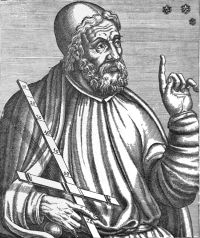
Ptolemy
Summary

The Tetrabiblos, authored by the Alexandrian scholar Claudius Ptolemy in the 2nd century CE, is a foundational treatise on astrology that organizes its principles, methods, and philosophical basis. Divided into four books, it examines the impact of celestial bodies on earthly events, focusing on astronomical patterns and their influence on human life, while advocating astrology as a logical, natural discipline grounded in observable facts.
Ptolemy’s work became a pillar of medieval and Renaissance astrology, shaping theological, medical, and literary discussions, and continues to be essential for contemporary practitioners, even as its scientific validity has waned. Its lasting impact stems from its methodical structure and its role in advancing astrological theory.
Quotes from Tetrabiblos (Ptolemy)
“ The moon, too, as the heavenly body nearest the earth, bestows her effluence most abundantly upon mundane things, for most of them, animate or inanimate, are sympathetic to her and change in company with her; the rivers increase and diminish their streams with her light, the seas turn their own tides with her rising and setting, and plants and animals in whole or in same part wax and wane with her. Moreover, the passages of the fixed stars and the planets through the sky often signify hot, windy, and snowy conditions of the air, and mundane things are affected accordingly. ”
“ Finally to Saturn falls as his lot old age, the latest period, which lasts for the rest of life. Now the movements both of body and of soul are cooled and impeded in their impulses, enjoyments, desires, and speed; for the natural decline supervenes upon life, which has become worn down with age, dispirited, weak, easily offended, and hard to please in all situations, in keeping with the sluggishness of his movements. ”
