Summary

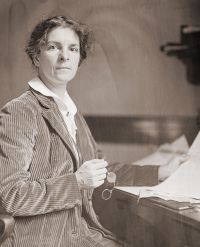
Portrait of Rheta Childe Dorr Rheta Childe Dorr What eight million women want

I do not mean by this that the girl who enters a factory at fourteen and works there ten hours a day until she marries increases her effectiveness as a mother. Industrial slavery unfits a woman for motherhood as certainly as intellectual and moral slavery unfits her.
Women who are free, who look on life through their own eyes, who think their own thoughts, who live in the real world of striving, struggling, suffering humanity, are the most effective mothers that ever lived. They know how to care for their own children, and more than that, they know how to care for the community's children.
Source: Gutenberg

Portrait of Rheta Childe Dorr Rheta Childe Dorr What eight million women want

A thousand generations of service, unpaid, loving, intimate, must have left the strongest kind of a mental habit in its wake. Women, when they emerged from the seclusion of their homes and began to mingle in the world procession, when they were thrown on their own financial responsibility, found themselves willy nilly in the ranks of the producers, the wage earners; when the enlightenment of education was no longer denied them, when their responsibilities ceased to be entirely domestic and became somewhat social, when, in a word, women began to think, they naturally thought in human terms.
Source: Gutenberg

Portrait of Rheta Childe Dorr Rheta Childe Dorr What eight million women want

New York is by no means unique. Every city has its dance hall problem; every small town its girl and boy problem; every country-side its tragedy of the girl who, for relief from monotony, goes to the city and never returns.
It is strange that nowhere, until lately, in city, town, or country, has it occurred to any one that the community owed anything to this insatiable thirst for joy.
Source: Gutenberg

Get perspective with Kwize: daily news enlightened by great literature