Summary

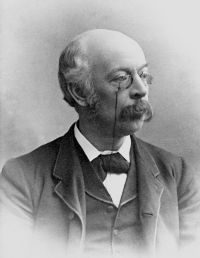
Portrait of Robert Adamson Robert Adamson 1911 Encyclopædia Britannica, Volume 15… (1911)

Understanding, as has been seen, is the faculty of cognition strictly so called; and within its realm, that of space, time and matter, positive knowledge is attainable. But the ultimate conception of understanding, that of the world of objects, quantitatively determined, and standing in relation of mutual reciprocity to one another, is not a final ground of explanation. We are still able and necessitated to reflect upon the whole world of phenomena as thus cognized, and driven to inquire after its significance.
Source: Wikisource

Portrait of Robert Adamson Robert Adamson 1911 Encyclopædia Britannica, Volume 15… (1911)

The ego has not in itself the element of difference, and the essence of knowledge is the consciousness of unity in difference. For knowledge, therefore, it is necessary that difference should be given to the ego. The modes under which it is possible for such given difference to become portion of the conscious experience of the ego, the modes under which the isolated data can be synthetically combined so as to form a cognizable whole, make up the form of cognition, and upon this form rests the possibility of any a priori or rational knowledge.
Source: Wikisource

Portrait of Robert Adamson Robert Adamson 1911 Encyclopædia Britannica, Volume 15… (1911)

Self-consciousness cannot be regarded as merely a mechanically determined result. Free reflection upon the whole system of knowledge is sufficient to indicate that the sphere of intuition, with its rational principles, does not exhaust conscious experience. There still remains, over and above the realm of nature, the realm of free, self-conscious spirit; and, within this sphere, it may be anticipated that the ideas will acquire a significance richer and deeper than the merely regulative import which they possess in reference to cognition.
Source: Wikisource

Get perspective with Kwize: daily news enlightened by great literature