Summary

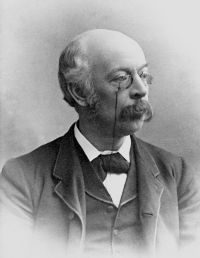
Portrait of Robert Adamson Robert Adamson Fichte — Chapter V. General Idea of Fichte's Philosophy (1881)

Fichte as well as Kant is aware that philosophy has only to think experience, that it in no way adds to experience, and that it must contain nothing beyond experience. “I declare,” he writes in one of the most popular of his expositions, “the very innermost spirit and soul of my philosophy to be, that man has nothing beyond experience, and that he obtains all that he has, from experience, from life only. All his thinking, whether vague or scientific, whether popular or transcendental, proceeds from experience and concerns nothing but experience.”
Source: Wikisource

Portrait of Robert Adamson Robert Adamson Fichte — Chapter V. General Idea of Fichte's Philosophy (1881)

Thus the philosophy of Fichte starts with the demand that the facts of experience shall be examined as facts of self-consciousness. They exist only for a thinking being, and their significance or interpretation for the thinking subject is the substance of philosophy. Philosophy is thus the re-thinking of experience,—the endeavour to construct by rigid and methodical analysis that which to ordinary consciousness presents itself as a completed and given whole.
Source: Wikisource

Portrait of Robert Adamson Robert Adamson Fichte — Chapter V. General Idea of Fichte's Philosophy (1881)

Speculation, therefore, in no way transcends the limits of experience; it does not extend the bounds of thinking; it intrudes in no way into the province of natural science, which is but an extension of ordinary consciousness. “No proposition of a philosophy which knows itself is, in that form, a proposition for real life.
Source: Wikisource

Get perspective with Kwize: daily news enlightened by great literature