Summary

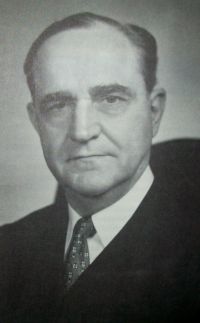
Portrait of Sherman Minton Sherman Minton Alabama Great Southern Company v…

The 'inherent advantage' of rail carriers shown here is superiority of service. The joint rail-barge rates do not fail to reflect this 'inherent advantage' for the same reason that a man who wishes to ride quickly and comfortably buys a Pullman ticket on a fast train instead of a coach seat on a 'milk run' train. No one would contend that fixing a lower price on the 'milk run' train seat fails to preserve the superior accommodations offered by a Pullman space. Each mode of transportation satisfies the needs and wants of some customers.
Source: Wikisource

Portrait of Sherman Minton Sherman Minton Alabama Great Southern Company v…

A railroad carrier allways gets the same amount for its leg, e.g., Big Four, Cairo to Cleveland (see illustration, above) , of a joint movement, whether the joint movement is all-rail or rail-barge. The railroad connecting with the barge carrier in a joint rail-barge movement is, as appellants admit, never hurt. 'It is not the rail lines with which the barge lines connect which object to these unjustified differentials. It is the rail lines with which the barge lines compete,' say appellants. In short, the railroads complain of competition.
Source: Wikisource

Portrait of Sherman Minton Sherman Minton Alabama Great Southern Company v…

The Commission is not bound to require a rate as high for the inferior as for the superior service. To do so would certainly destroy the principal worth of the inferior service and send all freight to the railroads; practically, there would be no competition between the different modes of transportation.
Neither the Commission nor this Court has held that lesser cost of service is a finding without which the Commission may not fix a charge, division of rate, or differential.
Source: Wikisource

Get perspective with Kwize: daily news enlightened by great literature