Summary

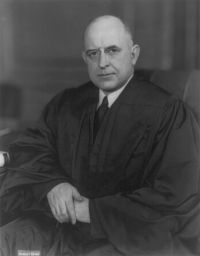
Portrait of Stanley Forman Reed Stanley Forman Reed Interstate Commerce Commission v…

It is suggested that there can be no competition because the railroad now has the business. But the railroad is not restricted to business which it now has. Between the key-points it is entitled to any and all business which it can get. Every future movement of freight will be the subject of competition. If, as assumed, the present railroad service is poor as compared with the proposed new motor carrier service, a new and important competitive element will certainly be introduced. The railroad wants this broad certificate so it can better compete with existing motor carriers.
Source: Wikisource

Portrait of Stanley Forman Reed Stanley Forman Reed Interstate Commerce Commission v…

Between those points the railroad will operate like any motor carrier. The service which it seeks to render is not a combined rail-and-truck service. As the Commission states in its report in the present case, 'The railroad, through its subsidiary, merely seeks the substitution of a more efficient for a less efficient means of service.' This 'substituted' service differs from the adequate independent motor carrier service already existing only in its being under railroad control.
Source: Wikisource

Portrait of Stanley Forman Reed Stanley Forman Reed Interstate Commerce Commission v…

It is, of course, obvious that opportunity exists for limited encroachment upon the over-the-road business of the existing motor carriers. A shipper from one way-station to another station on the same railroad within the permitted key point limitation may use the railroad motor carrier instead of the motor carrier. Free pickup and delivery service may extend the competition to the limits of the territorial boundaries of the railroad terminal areas and give a further advantage to the railroad where the motor carrier does not furnish the same service.
Source: Wikisource

Get perspective with Kwize: daily news enlightened by great literature