Summary

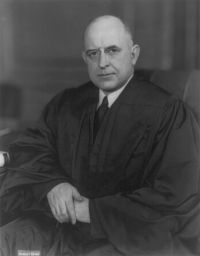
Portrait of Stanley Forman Reed Stanley Forman Reed United States v. Rock Island Motor Transit Company…

In other words, a railroad applicant for authority to operate as a common carrier by motor vehicle, though required to do no more than prove, as any other applicant, that its service is required by public convenience and necessity, has a special burden, not by reason of any attitude or action on our part, but by reason of the very circumstance that it is a railroad.
Source: Wikisource

Portrait of Stanley Forman Reed Stanley Forman Reed United States v. Rock Island Motor Transit Company…

When competition, public interest in the preservation of the inherent advantages of rails and motors, and use of motor service by railroads in their operation, are the basis, as they are (see National Transportation Policy, 54 Stat. 899 and § 5 (2) (b) for allowing acquisitions of motor routes by railroads, we think it consonant with that policy to reserve the right to make further limitations, restrictions or modifications to insure that the service remain auxiliary or supplemental.
Source: Wikisource

Portrait of Stanley Forman Reed Stanley Forman Reed United States v. Rock Island Motor Transit Company…

So long as it may fairly be said that the practice required from the motor carrier falls within the meaning the Commission has given to auxiliary and supplemental, the condition is valid.
Such restrictions hamper railroad companies in the use of their physical facilities-stations, terminals, warehouses-their personnel and their capital in the development of their transportation enterprises to encompass all or as much of motor transportation as the roads may desire. The announced transportation policy of Congress did not permit such development.
Source: Wikisource

Get perspective with Kwize: daily news enlightened by great literature