Summary

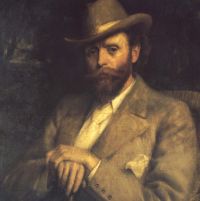
Portrait of Sir Hall Caine Sir Hall Caine The Woman of Knockaloe: A Parable

They are gone—back to their own country, which wants them not. The camp that has been their prison for four years is empty. It lies, in the quickening daylight, like a vast black scar on the green face of the mountain.
Suddenly a new thought comes to Mona. They may still avoid death. Life may yet be open to them.
Oskar,” she says, speaking in a rapid whisper, “now that the officers and the guard have gone, isn’t it possible that we could escape to somewhere ... where we should be unknown....”
Source: Gutenberg

Portrait of Sir Hall Caine Sir Hall Caine The Woman of Knockaloe: A Parable

When night came again their Fatherland might have fallen; they might be men without a country—mere outcasts thrown on to an overburdened world.
When the day breaks and the arc-lamps are put out, Mona sees the men moving about like wraiths in the grey light. But silence has now fallen on them. The ordinary regulations of the camp have been relaxed for the day, and they are not required to go to their workshops. When the bell rings for breakfast some of them forget they are hungry and remain in the open.
Source: Gutenberg

Portrait of Sir Hall Caine Sir Hall Caine The Woman of Knockaloe: A Parable

The sun has risen bright and clear, giving promise of another good day. Mona is driving out of the gate when she hears the crack of a rocket from the rocket-house connected with the lifeboat. She looks towards the sea. It lies as calm as a sleeping child, and there is not a ship in sight anywhere. What does it mean?
A cock is crowing in the barn-yard, Robbie’s dog is barking among the sheep on the hill, the bees are humming in the hedges of yellow gorse and the larks are singing in the blue sky.
Source: Gutenberg

Get perspective with Kwize: daily news enlightened by great literature