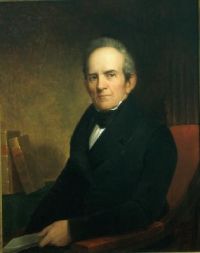
Summary

Portrait of Smith Thompson Smith Thompson Doe v. Winn — Opinion of the Court

That every prerequisite has been performed, is an inference properly deducible, and which every man has a right to draw, from the existence of the grant itself. It would be extremely unreasonable to avoid a grant in any Court for irregularities in the conduct of those who are appointed by the government to supervise the progressive course of a title, from its commencement to its consummation in a patent.
Source: Wikisource

Portrait of Smith Thompson Smith Thompson Doe v. Winn — Opinion of the Court

The objection alleges the patent to be void, because, by the laws of Georgia, no grant could issue for so great a number of acres as seven thousand three hundred, without stating the limitation as to the number of acres. But, from the argument, it is understood, that the limitation contended for on the part of the defendant, is to one thousand acres, and that all grants for a greater quantity are absolutely void.
How far it is within the province of a Court of law to entertain inquiries tending to impeach a patent, is a question upon which conflicting opinions have been held
Source: Wikisource

Portrait of Smith Thompson Smith Thompson Doe v. Winn — Opinion of the Court

The enacting clause speaks of two modes of acquiring these head-rights. One, a gratuity allowed to the head of the family; the other, a purchase. And the words granted and sold, as used in the proviso, may well be construed in reference to these two modes of acquiring land. And the proviso is equivalent to saying, that no one person shall be allowed, on his own head-right, and on the purchase of head-rights in his family, more than one thousand acres. But this does not prohibit him from purchasing other warrants, and including all in one grant when it is issued.
Source: Wikisource

Get perspective with Kwize: daily news enlightened by great literature