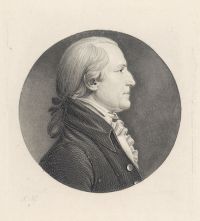
St. George Tucker

St. George Tucker

Summary

Portrait of St. George Tucker St. George Tucker,  A Dissertation on Slavery (1796)

“ From this melancholy review it will appear that not only the right of property, and the right of personal liberty, but even the right of personal security, has been, at times, either wholly annihilated, or reduced to a shadow: and even in these days, the protection of the latter seems to be confined to very few cases. Many actions, indifferent in themselves, being permitted by the law of nature to all mankind, and by the laws of society to all free persons, are either rendered highly criminal in a slave, or subject him to some kind of punishment or restraint. ”
Source: Wikisource

Portrait of St. George Tucker St. George Tucker,  A Dissertation on Slavery (1796)

“ This must happen within a century, if we do not set about the abolition of slavery. Will not our posterity curse the days of their nativity with all the anguish of Job? Will they not execrate the memory of those ancestors, who, having it in their power to avert evil, have, like their first parents, entailed a curse upon all future generations? We know that the rigour of the laws respecting slaves unavoidably must increase with their numbers: What a blood-stained code must that be which is calculated for the restraint of millions held in bondage! ”
Source: Wikisource

Portrait of St. George Tucker St. George Tucker,  A Dissertation on Slavery (1796)

“ Every sale implies a price, a quid pro quo, an equivalent given to the seller, in lieu of what he transfers to the buyer; but what equivalent can be given for life and liberty, both of which, in absolute slavery, are held to be in the master’s disposal? His property, also, the very price he seems to receive, devolves, ipso facto, to his master, the instant he becomes a slave. ”
Source: Wikisource

Get perspective with Kwize: daily news enlightened by great literature