Summary

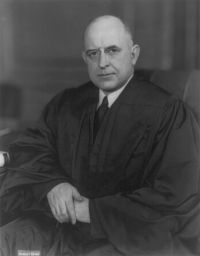
Portrait of Stanley Forman Reed Stanley Forman Reed American Trucking Ass'ns v. United States…

Unfortunate consequences are predicated for the public interest because the exempt owner-operator will no longer be able to hire himself out at will-in sum, that the industry's ability to serve a fluctuating demand will suffer and transportation costs accordingly go up. It is the Commission's position that the industry and the public will benefit directly because of the stabilization of conditions of competition and rate schedules, and that in fact the continued effectiveness of the Commission's functions under the Motor Carrier Act is dependent on regulation of leasing and interchange.
Source: Wikisource

Portrait of Stanley Forman Reed Stanley Forman Reed American Trucking Ass'ns v. United States…

Needless to say, the statute is not designed to allow farm truckers to compete with authorized and certificated motor carriers in the carriage of non-agricultural products or manufactured products for off-the-farm use, merely because they have exemption when carrying only agricultural products. We can therefore find nothing in it which implies protection of agricultural truckers' right to haul other property, even though from an economic standpoint that right is important to protect profit margins.
Source: Wikisource

Portrait of Stanley Forman Reed Stanley Forman Reed American Trucking Ass'ns v. United States…

Rate-making represents an order affecting the volume of income; it is said to confiscate property when it prohibits a reasonable return on investment beyond operating and initial costs. But the economic significance of the abolishment of trip-leasing is not nearly so direct. The Commission has merely determined by what method the carrier's income is to be produced, and not how much it may charge.
Source: Wikisource

Get perspective with Kwize: daily news enlightened by great literature