Summary

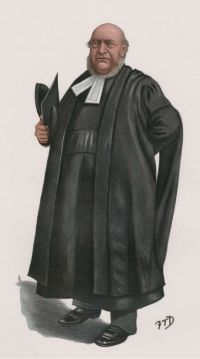
Portrait of Thomas Fowler Thomas Fowler 1911 Encyclopædia Britannica, Volume 14… (1911)

The term “moral sense” (which, it may be noticed, had already been employed by Shaftesbury, not only, as Dr Whewell appears to intimate, in the margin, but also in the text of his Inquiry) , if invariably coupled with the term “moral judgment,” would be open to little objection; but, taken alone, as designating the complex process of moral approbation, it is liable to lead not only to serious misapprehension but to grave practical errors. For, if each man’s decisions are solely the result of an immediate intuition of the moral sense, why be at any pains to test, correct or review them?
Source: Wikisource

Portrait of Thomas Fowler Thomas Fowler 1911 Encyclopædia Britannica, Volume 14… (1911)

All mankind may, apart from their selfish interests, approve that which is virtuous or makes for the general good, but surely they entertain the most widely divergent opinions, and, in fact, frequently arrive at directly opposite conclusions as to particular actions and habits. This obvious distinction is undoubtedly recognized by Hutcheson in his analysis of the mental process preceding moral action, nor does he invariably ignore it, even when treating of the moral approbation or disapprobation which is subsequent on action.
Source: Wikisource

Portrait of Thomas Fowler Thomas Fowler 1911 Encyclopædia Britannica, Volume 14… (1911)

To a study of the writings of Shaftesbury and Hutcheson we might, probably, in large measure, attribute the unequivocal adoption of the utilitarian standard by Hume, and, if this be the case, the name of Hutcheson connects itself, through Hume, with the names of Priestley, Paley and Bentham. Butler’s Sermons appeared in 1726, the year after the publication of Hutcheson’s two first essays, and the parallelism between the “conscience” of the one writer and the “moral sense” of the other is, at least, worthy of remark.
Source: Wikisource

Get perspective with Kwize: daily news enlightened by great literature