U. G. Krishnamurti

U. G. Krishnamurti

Summary

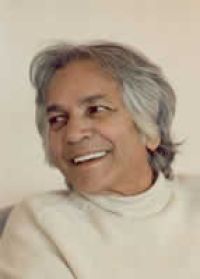
Portrait of U. G. Krishnamurti U. G. Krishnamurti,  No Way Out — Introduction

“ But we see no choice; and we try to let go of the concern and return to our normal routine life. We, in the process, even try to "drop" U.G. from our consciousness, for U.G. is only a symbol for all that we have been seeking to fulfill ourselves. And when U.G. is gone, the rest is gone too. All the things we seek for our fulfillment, including U.G., are nothing but ourselves. That is why, when they (and U.G.) are gone, the self is gone too. ”
Source: Wikisource

Portrait of U. G. Krishnamurti U. G. Krishnamurti,  No Way Out — Introduction

“ When U.G. says that the situation brings about the thought, does that mean that he is just a victim of the situation, and that so as far as he is concerned anything can happen? Or, in him too, is there a consciousness of the situation, and a deliberation as to what is appropriate to it? If the latter is the case, then how is he different from us?
Of course, it is also true that we often spontaneously respond to situations without prior deliberation or forethought, even if the response happens to be just saying something. We don't always think first and then act.
”
Source: Wikisource

Portrait of U. G. Krishnamurti U. G. Krishnamurti,  No Way Out — Introduction

“ You merely return to your normal daily routine, whatever it consists of. The routine may include the movement back and forth, say, of being concerned and not so concerned with U.G. and his teachings, just as, when we are not conscious of ourselves, there may be a movement back and forth between being involved in things and being bored. When we become conscious of ourselves, we may let everything (even our concern for our fulfillment or freedom) go, or accept our condition, or merely return to the present moment, which is one and the same thing. ”
Source: Wikisource

Get perspective with Kwize: daily news enlightened by great literature