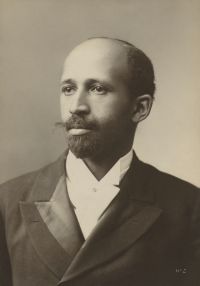
W.E.B. DuBois

W.E.B. DuBois

Summary

Portrait of W.E.B. DuBois W.E.B. DuBois The Freedmen's Bureau (1901)

It was rather a choice between suffrage and slavery, after endless blood and gold had flowed to sweep human bondage away. Not a single Southern legislature stood ready to admit a Negro, under any conditions, to the polls; not a single Southern legislature believed free Negro labor was possible without a system of restrictions that took all its freedom away; there was scarcely a white man in the South who did not honestly regard emancipation as a crime, and its practical nullification as a duty.
Source: Wikisource

Portrait of W.E.B. DuBois W.E.B. DuBois The Freedmen's Bureau (1901)

The opposition to Negro education was bitter in the South, for the South believed an educated Negro to be a dangerous Negro. And the South was not wholly wrong; for education among all kinds of men always has had, and always will have, an element of danger and revolution, of dissatisfaction and discontent. Nevertheless, men strive to know. It was some inkling of this paradox, even in the unquiet days of the Bureau, that allayed an opposition to human training, which still to-day lies smouldering, but not flaming.
Source: Wikisource

Portrait of W.E.B. DuBois W.E.B. DuBois The Freedmen's Bureau (1901)

The passing of a great human institution before its work is done, like the untimely passing of a single soul, but leaves a legacy of striving for other men. The legacy of the Freedmen's Bureau is the heavy heritage of this generation. Today, when new and vaster problems are destined to strain every fibre of the national mind and soul, would it not be well to count this legacy honestly and carefully? For this much all men know: despite compromise, struggle, war, and struggle, the Negro is not free.
Source: Wikisource

Get perspective with Kwize: daily news enlightened by great literature