Summary

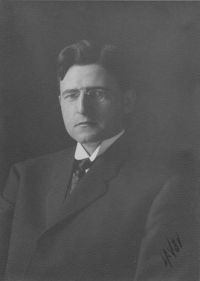
Portrait of Wesley Newcomb Hohfeld Wesley Newcomb Hohfeld Some Fundamental Legal Conceptions as Applied in Judicial Reasoning (1913)

In a strict legal sense, land is not 'property', but the subject of property. The term 'property', although in common parlance frequently applied to a tract of land or a chattel, in its legal signification 'means only the rights of the owner in relation to it'. 'It denotes a right over a determinate thing'. 'Property is the right of any person to possess, use, enjoy, and dispose of a thing'.
Source: Wikisource

Portrait of Wesley Newcomb Hohfeld Wesley Newcomb Hohfeld Some Fundamental Legal Conceptions as Applied in Judicial Reasoning (1913)

The nature of an use is best discerned by considering what it is not, and then what it is. * * * First, an use is no right, title, or interest in law; and therefore master attorney, who read upon this statute, said well, that there are but two rights: Jus in re: Jus ad rem.
The one is an estate, which is jus in re; the other a demand, which is jus ad rem but an use is neither. * * * So as now we are come by negatives to the affirmative, what an use is. * * * Usus est dominium fiduciarium: Use is an ownership in trust.
Source: Wikisource

Portrait of Wesley Newcomb Hohfeld Wesley Newcomb Hohfeld Some Fundamental Legal Conceptions as Applied in Judicial Reasoning (1913)

Thus it was said that a man has a perfect right to fire off a gun, when all that was meant, apparently, was that a man has a freedom or liberty to fire off a gun, so long as he does not violate or infringe any one's rights in doing so, which is a very different thing from a right, the violation or disturbance which can be remedied or prevented by legal process. [59]
While there are numerous other instances of the apt use of the term "liberty," both in judicial opinions [60] and in conveyancing documents, [61] it is by no means so common or definite a word as "privilege."
Source: Wikisource

Get perspective with Kwize: daily news enlightened by great literature