Summary

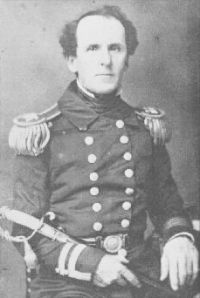
Portrait of William Francis Lynch William Francis Lynch Narrative Of The United States Expedition To The River Jordan And The Dead Sea… (1849)

Passing through an extensive olive-orchard, with grain growing beneath and around the trees, we opened the town, seated near the head of a narrow valley, with the ruins of a bridge, over a deep ravine, and a castle towering high on the hill which overlooked it from the east. In every direction there were broken shafts and capitals of marble pillars scattered upon the ground, and an entire bridge, through the single arch of which rushed a clear, rapid stream, that immediately after leaped down some twenty feet, and was lost to sight in the deep and winding gorge.
Source: Wikisource

Portrait of William Francis Lynch William Francis Lynch Narrative Of The United States Expedition To The River Jordan And The Dead Sea… (1849)

We soon after reached the fountain Bareideh, with ruins of baths. The clear thermal stream gushes from the ground and flows into a reservoir, and thence, through another, out upon the shore and into the sea. There were many oleanders and purple flowers growing around, forming a lovely grove, and there were some gardens and cucumber beds behind and beside it. Resting a short while near Mejdel (Magdala) , our road ran parallel with the sea-shore, with the luxuriant but uncultivated plain of Chinnereth on our left, and the holy city of Safed and Mount Hermon towering before us.
Source: Wikisource

Portrait of William Francis Lynch William Francis Lynch Narrative Of The United States Expedition To The River Jordan And The Dead Sea… (1849)

In the afternoon, our course led along the western edge of the plain, between the lake and the mountains. We passed a large pond filled by numerous springs; a Turkish mausoleum on a high western cliff, and a deep and wide ravine, with ruins on its northern summit. The plain seemed perfectly level to the eye; and there were two streams running down its northern end, which, with the numerous fountains, render it very fertile. There were many encampments of the fellahin, who cultivate rice and dhoura.
Source: Wikisource

Get perspective with Kwize: daily news enlightened by great literature