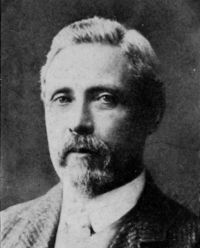
William Mitchell Ramsay

William Mitchell Ramsay

Summary

Portrait of William Mitchell Ramsay William Mitchell Ramsay 1911 Encyclopædia Britannica (1911)

The annual vicissitudes of the life of Sabazius, the Greek Dionysus, were accompanied by the mimic rites of his worshippers, who mourned with his sufferings and rejoiced with his joy. They enacted the story of his birth and life and death; the Earth, the Mother, is fertilized only by an act of violence by her own child; the representative of the god was probably slain each year by a cruel death, just as the god himself died.
Source: Wikisource

Portrait of William Mitchell Ramsay William Mitchell Ramsay 1911 Encyclopædia Britannica (1911)

According to Greek tradition there existed in early time a Phrygian kingdom in the Sangarius valley, ruled by kings among whom the names Gordius and Midas were common. It was known to the ancient Greeks of Ionia and the Troad as something great and half-divine. When the goddess appeared to her favourite Anchises she represented herself as daughter of the king of Phrygia; the Phrygians were said to be the oldest people, and their language the original speech of mankind
Source: Wikisource

Portrait of William Mitchell Ramsay William Mitchell Ramsay 1911 Encyclopædia Britannica (1911)

While Phrygian art is distinctly non-Oriental in spirit, its resemblance to archaic Greek art is a fact of the greatest importance. It is not merely that certain types are employed both in Phrygia and in Greece, but several favourite types in early Greek art can be traced in Phrygia, employed in similar spirit and for similar purposes. The heraldic type of the two lions is the device over the principal gateway of Mycenae, and stamps this, the oldest great monument on Greek soil, with a distinctly Phrygian character.
Source: Wikisource

Get perspective with Kwize: daily news enlightened by great literature