Summary

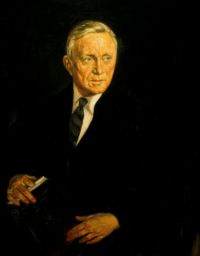
Portrait of William O. Douglas William O. Douglas State Tax Commission of Utah v…

To suggest that when this Court finds that a law is not offensive to the Constitution and that it must therefore stand, we make the same kind of judgment as when on rare occasions we find that a law is offensive to the Constitution and must therefore fall, is to disregard the role of this Court in our Constitutional system since its establishment in 1789.
Source: Wikisource

Portrait of William O. Douglas William O. Douglas State Tax Commission of Utah v…

Intangibles, except for government issues, are an outgrowth of our modern corporation system. Of relatively recent growth, the corporation has become almost the unit of organization of our economic life. Whether for good or ill, the stubborn fact is that in our present system the corporation carries on the bulk of production and transportation, is the chief employer of both labor and capital, pays a large part of our taxes, and is an economic institution of such magnitude and importance that there is no present substitute for it except the state itself.
Source: Wikisource

Portrait of William O. Douglas William O. Douglas State Tax Commission of Utah v…

To refuse to nullify legislation the frailties of which we think we see, is to respect the bounds of our Constitutional authority and not to indulge in a fiction. See James Bradley Thayer, The Origin and Scope of the American Doctrine of Constitutional Law, 7 Harv.L.Rev. 129. To allow laws to stand is to allow laws to be made by those whose task it is to legislate.
Source: Wikisource

Get perspective with Kwize: daily news enlightened by great literature