Summary

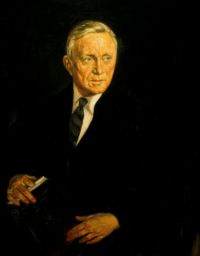
Portrait of William O. Douglas William O. Douglas Volkswagenwerk Aktiengesellschaft v…

I can imagine a regime of total controls where such prior approval would be required. But we have no such regime at present; and I can see no possible justification for a judicially created one in the explosive maritime field. To meet the costs increased by any collective bargaining agreement, a company might have to raise its prices and pass at least part of the added cost on to the consumer. But this happens all the time in the maritime industry, as well as in other industries, and does not constitute rate fixing of the type at which the Shipping Act is aimed.
Source: Wikisource

Portrait of William O. Douglas William O. Douglas Volkswagenwerk Aktiengesellschaft v…

A collective bargaining agreement is the product of negotiations. How can negotiators sitting at a table arrive at an agreement if they know that a major part of it depends on the approval of the Federal Maritime Commission? How many months-or years-will it take to get approval? What will happen meanwhile? Will not the imposition of that kind of administrative supervision bring an end to, or at least partially paralyze, collective bargaining?
The Mech Fund is a labor expense. Increased labor costs normally are passed on at least in part by increased prices.
Source: Wikisource

Portrait of William O. Douglas William O. Douglas Volkswagenwerk Aktiengesellschaft v…

But despite the reduction in hostility between labor and management, solutions to problems were not readily forthcoming. Business was bad for the shipping companies-foreign competitors had cut heavily into the market, and a decline in business meant less work for both seamen and longshoremen. Modernization was sorely needed, but it was also greatly feared, for mechanization would cut out jobs. But without improved techniques and facilities, the employers could not regain a strong competitive position.
Source: Wikisource

Get perspective with Kwize: daily news enlightened by great literature