Summary

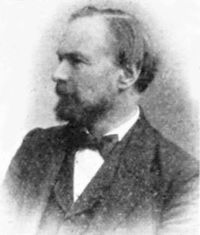
Portrait of William Stewart Ross William Stewart Ross Practical Text-Book of Grammatical Analysis (1870)

A sentence (Latin sensio, I feel) is a feeling or thought expressed in words.
Every thought or feeling centres upon some subject, and next there is something thought or felt on that subject. When a sentence is expressed, that which we express in regard to the subject is called the predicate. Accordingly, every sentence must necessarily consist of a subject and a predicate—that is, the thing thought or felt about, and what is thought, felt, or asserted about it.
Source: Wikisource

Portrait of William Stewart Ross William Stewart Ross Practical Text-Book of Grammatical Analysis (1870)

The very martyrs, to whom we owe much of that freedom in which we now rejoice as a cherished birthright, whose memories are dear to every man who is capable of appreciating high principle, patient endurance, unconquerable faith, and by whose humble graves the soil of our country is consecrated and hallowed,—these very martyrs he has tried to rob of their peculiar honours.—Dr Andrew Thomson.
Knowest thou not this of old, since man was placed upon the earth, that the triumphing of the wicked is but short, and the joy of the hypocrite is but for a moment?
Source: Wikisource

Portrait of William Stewart Ross William Stewart Ross Practical Text-Book of Grammatical Analysis (1870)

If amid the thickest welter of surrounding gluttony and baseness, and what must be reckoned bottomless anarchy from shore to shore, there be found no man, no small but invincible minority of men, capable of keeping themselves free from all that, and of living a heroically human life, while the millions round them are noisily living a mere beaverish or dog-like one, then truly all hope is gone.—Thomas Carlyle.
Source: Wikisource

Get perspective with Kwize: daily news enlightened by great literature