Abbaye du Cluny

Definition and stakes

Various,  Encyclopaedia Britannica, 11th Edition…

“ From one point of view, it may be regarded as a compromise between the primitive Benedictine system, whereby each abbey was autonomous and isolated, and the complete centralization of Cluny, whereby the abbot of Cluny was the only true superior in the body. Cîteaux, on the one hand, maintained the independent organic life of the houses—each abbey had its own abbot, elected by its own monks; its own community, belonging to itself and not to the order in general; its own property and finances administered by itself, without interference from outside. ”
Source: Gutenberg

Various,  Encyclopaedia Britannica, 11th Edition…

“ The energy of a succession of distinguished abbots and the disciples whom they inspired succeeded in bringing about the victory of the reforming ideas in the French monasteries; once more the rule of St Benedict controlled the life of the monks. A large number of the reformed monasteries attached themselves to the congregation of Cluny, thus assuring the influence of reformed monasticism upon the Church, and securing likewise its independence of the diocesan bishops, since the abbot of Cluny was subordinate of the pope alone. ”
Source: Gutenberg

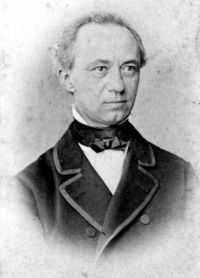
Portrait of Conrad von Bolanden Conrad von Bolanden,  Barbarossa; An Historical Novel of the XII Century

“ CHAPTER XLII. THE ABBEY OF CLUNY. The Abbey of Cluny belonged to the most illustrious of the religious orders, and controlled two thousand convents distributed throughout Christendom and Palestine. It was not only a pious sanctuary, but also a school, the renown of which extended beyond the seas. Unlike the monks of the other orders who were chiefly engaged in agriculture and field labors, the peaceful denizens of Cluny were entirely devoted to study and the pursuit of science, and attached a greater value to their manuscripts than to any material treasures. ”
Source: Gutenberg

Get perspective with Kwize: daily news enlightened by great literature