“ I have the honor to thank you, in the name of the Commission of Public Health, for the enlightened and devoted attention which the American Ambulance is lavishing upon our wounded at Pont-à-Mousson.In the distressing hours that we are passing through, it is particularly sweet to us to know that friendly hands are zealously employed about those of our troops who are shedding their blood so fearlessly in defence of our country. ”
American Ambulance
Definition and stakes
The theme of “American Ambulance” has been addressed by authors such as Various, Fred Arthur McKenzie, Arthur Gleason, Philip Dana Orcutt and Kelly Miller. It is often associated with terms like Paris, hospital, artillery, trench and field.
Quotes about “American Ambulance”
“ Upon the chassis as received from the States is built a strong, light ambulance body of tough wood and canvas. The design provides for the utmost economy [Pg 149] of space, and although the cubical contents are perhaps not more than half of that of the body of an ordinary ambulance of the kind constructed to carry four stretchers, the typical cars of the American Ambulance can carry three. Two stretchers stand on the floor of the car and the third is supported under the roof by a simple and ingenious contrivance designed by one of the Section leaders to meet the special needs of the service. ”
Julien H. Bryan, Ambulance 464 (1918)
“ The American Ambulance Field Service was taken over by our army in France in October, 1917, and although many of its sections are still serving with the French forces it has lost its former identity. A few drivers remain, and several hundred have returned home ”
“ AN AMERICAN AMBULANCE DRIVER A few companies of soldiers go leisurely past on their way up to the trenches, and nearly every man has something to say to the American driver. Five out of ten will point to the ambulance and cry out [Pg 75] with questionable but certainly cheerful enough humor, "Save a place for me to-morrow!" ”
Julien H. Bryan, Ambulance 464 (1918)
“ We of the American Ambulance Field Service have no desire to pose as heroes. I went over, as did so many of the others, with the object of seeing war at first hand and of getting some excitement, as well as being of some service. But we do not care to be talked of as young heroes trying to save France, because that was not our idea in going, at any rate not at first. ”
United States. Army. American Expeditionary Forces, The Stars and Stripes, Vol. 1, No…
“ An ambulance carries you somewhere so that you can get some rest; a traveling tooth-yankery doesn't give you a chance to rest. It's white, is the outside of the car, just like a baby's hearse, and just about as cheerful to contemplate. ”
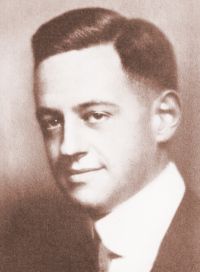 Eric Fisher Wood,
The Note-Book of an Attaché: Seven Months in the War Zone
“ It is from this station that the American Hospital receives its patients, invariably cases whose condition is so grave that they are thought to be incapable of enduring further travel without fatal results.Upon entering the service of the Ambulance all volunteers, no matter what their ultimate position is to be, are required to attain a certain efficiency and practical knowledge in the actual handling of wounded. I am now taking my turn at this service. One train of ambulances is always stationed in Paris and carries wounded from the Aubervilliers station to the various city hospitals. ”
Charles Edward Ryan, With an Ambulance During the Franco-German War
“ The truth was that nobody could teach our veteran Americans anything new in the management of a Field Hospital. They had all served their time during the four years of the American War, and under a system of military medical organisation which, as all authorities acknowledge, they had brought to perfection. This was the secret of the undoubtedly successful career of our Ambulance. And I must not omit to observe that it was they who introduced the anterior suspension splint for fractures and wounds of the joints, which we were the means of having adopted in many of the German Hospitals. ”
Philip Dana Orcutt, The White Road of Mystery: The Note-Book of an American Ambulancier
“ They carry five couchés or eight assis, and have two men to a car. The French Army ambulances are all gear-shift, and the gear-shift sections included in the American Field Service all originally belonged to the French Government. Before the American Government took over the Ambulance Corps, the American Field Service, in addition to sending out Ford sections as quickly as they were subscribed in America, had been gradually absorbing the French Ambulance System, relieving with its own men the French drivers who could then serve in the trenches, and including those sections among its own. ”
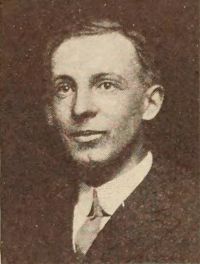 Arthur Gleason,
Our Part in the Great War
“ There is never a slip, and that is why they are doing this work. The American Ambulance has the job of unloading three-fourths of all the wounded that come into Paris. The boys are strong and sure-handed, and the War Ministry rests easy in letting them deal with this delicate, important work. They feel pride in a prompt clean-cut job. But, more than that, they have a deep inarticulate desire to make things easier for a man in pain. I saw the boys pick up stretcher after stretcher as it lay on the platform and hurry it to the doctor. ”
Eric Fisher Wood,
The Note-Book of an Attaché: Seven Months in the War Zone
“ There is in general such a lack of adequate service for the wounded that to work with the Ambulance Corps and thus contribute one’s mite of helpfulness is almost a duty for any American who can spare even a few weeks of time. When one has seen thousands of wounded, as I saw them at the Battle of the Marne, lying for three and four days in the rain without food, drink, or any medical aid, one is irresistibly driven to do something to diminish such terrible suffering. Many young Americans are feeling the same impulse and volunteers for ambulance service are numerous. ”
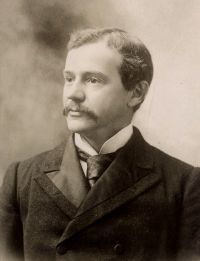 Howard Atwood Kelly,
American Medical Biographies
(1920)
“ For many months he made examinations at the Enrolment Offices, and after a visit to the battlefields of the South, where he was shocked and horrified at the shameful lack of an ambulance system, with the consequent fearful and unnecessary suffering of wounded soldiers, he addressed letters to Congress, and especially to Vice-President Johnson, and with characteristic ardor described his personal observations of the condition of our suffering soldiers. ”
Fred Arthur McKenzie, Americans at the Front (1917)
“ The two main groups are the American Volunteer Motor AMERICANS AT THE FRONT 21 Ambulance Corps and the American Ambu- lance Field Service, the latter much the larger. The American Volunteer Motor Ambulance Corps owes its existence to a group of wealthy young Americans, headed by Mr. Richard Nor- ton, who came over to France at the beginning of the war to offer their services. There were many difficulties in their way. The need of ambulances was tremendous, for the military cars then available were few, and anything but modern. For a time the Americans worked with a British group. ”
Various, History of Ambulance Company Number 139
“ Many of the soldiers acquired private instructors in the shape of small French boys who were only too glad to be adopted by the Americans. The typewriter in the office was a big drawing card for children. There was always a large bunch hanging around to watch "Abe" operate the machine.We received some English army trucks here and after teaching them to "Talk American" used them as ambulances. We evacuated the sick of the division to Field Hospital 137 at Eloyes.About the middle of June the division was ordered up to take over the sector east of us in Alsace. Lieut. ”
W. Crispin Sheppard, Don Hale Over There (1918)
“ During the early part of the war the wounded were often obliged to wait a long time before being removed, and it was generally in a slowly-moving horse-drawn vehicle. The advent of the Red Cross and the American Field Ambulance was the means of bringing about a wonderful change. The light cars of the sections could travel fast, and whenever haste was the chief and perhaps deciding factor between life and death the patients could be taken to the field hospitals in from ten to twenty minutes. These hospitals were situated about six or seven kilometers from the front. ”
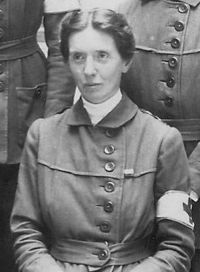 Flora Murray,
Women as army surgeons
(1920)
“ These ambulances were staffed by a fine set of young women, whose serviceable uniform and alert, well-drilled bearing were a credit to their service. It was a pleasure, when the ambulance turned into the square, to see these active girls, in their navy blue suits of breeches and tunic, swing themselves off the car, throw the doors open, unload and bear the stretcher with its burden to the casualty room. ”
“ In the early days, when these old ambulances were working side by side with ours, wounded men being brought from the trenches would ask to be carried by the Americans. That the latter should have come so far to help them, should be so willing to lose sleep and food that they should be saved from pain, and should take the daily risks of the soldiers without necessity or recompense seemed to touch them greatly. It was not long before the words "Ambulance Américaine" would pass a man by any sentry post. ”
Various, The Great Round World and What Is Going On In It…
“ The purpose of the New York Ambulance Red Cross Equipment Society is to assist the Red Cross during this war between America and Spain by providing ambulances and ambulance launches for moving sick or wounded soldiers to field hospitals or hospital ships. ”
 George Alfred Townsend,
Campaigns of a Non-Combatant, and His Romaunt Abroad During the War
“ Both the prisoners and the wounded were removed between midnight and morning to White House, and as I had despatches to forward by the mail-boat, I rode down in an ambulance, that contained six wounded men besides. The wounded were to be consigned to hospital boats, and forwarded to hospitals in northern cities, and the prisoners were to be placed in a transport, under guard, and conveyed to Fort Delaware, near Philadelphia.Ambulances, it may be said, incidentally, are either two-wheeled or four-wheeled. Two-wheeled ambulances are commonly called "hop, step, and jumps." ”
Various, History of Ambulance Company Number 139
“ The non-coms were charged with locating wounded and directing litter squads to them, and also with doing most of the dressing. The wounded were to be gathered into groups located so that ambulances could reach and evacuate them to the triage which was established later in the day at Neuvilly, by Ambulance Company 138. The entire company, less cooks, took to the field and the cooks, by trading grub for transportation, managed to keep in touch with part of us part of the time. ”
Various, History of Ambulance Company Number 139
“ For efficient, effective and courageous work in the open field with a detachment of mule drawn ambulances under heavy artillery and machine gun fire.Sergeant 1st Class Charles G. Rowland, M. D., Ambulance Co. 139, September 29th near Charpentry. While his company was on the march from Charpentry to Varennes, Sergeant Rowland stopped to attend a truck driver who had been struck by a shell. Disregarding all personal danger, he passed through a curtain of artillery fire and dressed the wounded man. ”
Various, History of Ambulance Company Number 139
“ Every one worked at top speed, as the wounded were coming in so fast that it required the services of almost the entire company to take care of them. Later in the afternoon a detachment was sent to Baulney, and with the aid of some mule ambulances, cleared the regimental station there of wounded. Later, motor ambulances began to arrive and the wounded were started back toward the triage at Cheppy. From this time on the evacuation was continuous, ambulances from Ambulance Co. 41 and S. S. U. sections undertaking this work. Many empty, returning ammunition trucks were also used. ”
John D. Billings, Hardtack and coffee (1887)
“ It provided that no one but the proper medical officers or the officers, non-commissioned officers, and privates of the ambulance corps should conduct sick or wounded to the rear, either on the march or in battle, but as a matter of fact there were probably more wounded men helped off the field by soldiers not members of the ambulance corps than by members of that body. ”
William E. Sellers, With Our Fighting Men
“ A word of cheer to be spoken to all. It is indeed in the field [181] ambulance where valuable service is rendered to men and staff in a hundred ways."To keep in touch with most of our men thus passing through the ambulances, each ambulance operating in a different centre, necessitates from four to six hours' duty each night."Besides the work of the hospitals there are pressing day duties to be performed. Burials must receive attention. Regiments must be visited. Many calls are received from anxious and troubled men. Even the firing line claims attention at times in the performance of duty. ”
Charles Edward Ryan, With an Ambulance During the Franco-German War
“ In the week which followed the battle of Beaugency, nothing happened worthy of special record; we were always at work from daylight to dark, and fresh convoys of wounded were brought in daily from that neighbourhood. When one has such an absorbing subject of interest as the routine of an Ambulance, from its very nature, and especially after a severe engagement, the days pass like hours. ”
J. H. Morgan, Leaves from a Field Note-Book
“ Field ambulances, like the batteries, are somewhat migratory in their habits, and change their positions [Pg 98] according as they are wanted. But a field ambulance is not, as might be supposed, a vehicle but a unit of the R.A.M.C, with a major or a colonel in charge as O.C. The A.D.M.S. of a division has three field ambulances under him, and when an attack in force is projected he mobilises these three units at forward dressing stations in the rear of the trenches. They are a link between the aid-posts in front and the collecting stations behind. ”
Anonymous, With my regiment (1915)
“ In the morning a fleet of motor ambulances came to take us to the clearing hospital at railhead. Most of these ambulances were private cars fitted up at their owners' expense and driven in many cases by the owners too. Only those who have been wounded and travelled in a Government horse ambulance can appreciate the good work done by these volunteer Red Cross workers and their cars. After the lumbering horse vehicle rubber tyres and the well-hung body of a private car are an unspeakable relief to broken bones. ”
“ The ambulance will be here in a minute or two,—it's just below us down the cañon now."Indeed, almost at the moment the click of iron-shod hoofs was heard, and the dejected mule-team came into view around a jutting point, the dingy yellow ambulance jolting after them, one soldier in the driver's seat handling the reins, the other riding behind and leading his comrade's horse."Come up here to the mouth of the cave, Merrill," called the lieutenant. "You can unhitch and unharness just beyond; but I want that safe unloaded and put in here.""The safe's gone, sir." ”
“ Chambre des Députés Paris, le 6 août 1915Monsieur le Directeur,—J'ai l'honneur de vous remercier, au nom de la Commission d'Hygiène publique, des soins éclairés et dévoués que l'Ambulance Américaine prodigue à nos blessés de Pont-à-Mousson.Dans les tristes heures que nous vivons, il nous est particulièrement doux de savoir que des mains amies s'empressent autour de ceux des nôtres qui si courageusement versent leur sang pour la défense de notre Pays. ”
Julien H. Bryan, Ambulance 464 (1918)
“ It won't be long before we get the cars. From the stories of fellows who are in on permission from different parts of the front it appears that a Sanitary Section consists of twenty to twenty-five ambulances, each of which carries three stretcher or five sitting cases. ”
T. C. De Leon, Four Years in Rebel Capitals
“ Next morning the usual stillness of Sunday was broken by the renewed rattle of musketry—though farther off and less continuous than the day before; and by the more constant and nearer rumble of ambulance and dead cart. At dawn many of the townspeople had gone in buggies, wagons, and even the huge vans of the express companies, taking with them food and stimulants, to aid the very limited ambulance corps of the army. ”
Julien H. Bryan, Ambulance 464 (1918)
“ The main street of the village is on a steep grade. I pulled up opposite the Epicerie and leaving the motor running, I wandered around the neighborhood to see if I could get the "Vin Rouge." But when I found all the inhabitants in bed, I returned to the spot where I left the car. To my dismay it was no longer there. And looking about, endeavoring to find what had become of it, I saw several hundred yards down the hill, the indistinct form of an ambulance; I ran down to it and found it up against the stone wall of a house. I thought surely the front axle would be twisted or a wheel taken off ”
Related terms
Authors who wrote about “American Ambulance”
VariousFred Arthur McKenzieArthur GleasonPhilip Dana OrcuttKelly MillerEric Fisher WoodIan HayPat Beauchamp WashingtonKatharine Duncan MorseGeorge Gallie NasmithMargaret VandercookInnes LoganFlora MurrayJulien H. BryanCharles Edward RyanHubert FosterWilliam E. SellersHoward Atwood KellyGeorge Alfred TownsendUnited States. Army. American Expeditionary Forces
Arthur GleasonPhilip Dana OrcuttKelly MillerEric Fisher WoodIan HayPat Beauchamp WashingtonKatharine Duncan MorseGeorge Gallie NasmithMargaret VandercookInnes LoganFlora MurrayJulien H. BryanCharles Edward RyanHubert FosterWilliam E. SellersHoward Atwood KellyGeorge Alfred TownsendUnited States. Army. American Expeditionary Forces