Anna Karenina

Definition and stakes

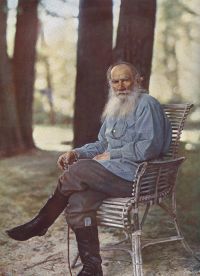
Portrait of Leo Tolstoy Leo Tolstoy,  Anna Karenina (1877)

“ On meeting Anna Karenina, as he was Alexey Alexandrovitch’s enemy in the government, he tried, like a shrewd man and a man of the world, to be particularly cordial with her, the wife of his enemy.
“‘Nothing,’” he put in with a subtle smile, “that’s the very best way. I told you long ago,” he said, turning to Liza Merkalova, “that if you don’t want to be bored, you mustn’t think you’re going to be bored. It’s just as you mustn’t be afraid of not being able to fall asleep, if you’re afraid of sleeplessness. That’s just what Anna Arkadyevna has just said.”
”
Source: Gutenberg

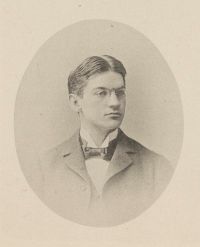
Portrait of Abraham Cahan Abraham Cahan,  The Imported Bridegroom, and Other Stories of the New York Ghetto

“ And yet, as the case of Anna Karenina now came to her mind, as an illustration of her own position, it smote her consciousness as a startling discovery.
"And so I am a married woman in love with another man!" was her first thought; and with her soul divided between a benumbing terror and the sweet titillation produced by a sense of tasting forbidden fruit, she involuntarily repeated the mental exclamation:—
"Yes, I am a married woman in love with another man!"
And with a painful, savage sort of relish she went on staring at her husband's scar and listening to his fatigued breathing.
”
Source: Gutenberg

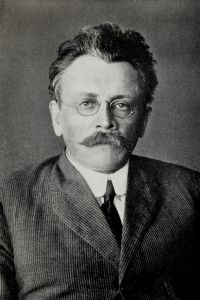
Portrait of William Lyon Phelps William Lyon Phelps,  Essays on Russian Novelists

“ Tolstoi's genius reached its climax in Anna Karenina. Greatly as I admire some of his other books, I would go so far as to say that if a forced choice had to be made, I had rather have Anna Karenina than all the rest of his works put together. Leave that out, and his position in the history of fiction diminishes at once. It is surely the most powerful novel written by any man of our time, and it would be difficult to name a novel of any period that surpasses it in strength. ”
Source: Gutenberg

Get perspective with Kwize: daily news enlightened by great literature