Antipholus of Ephesus

Definition and stakes

Mary Lamb Tales from Shakespeare — The Comedy of Errors (1908)

The moment Antipholus of Syracuse had left the house, he was met by a goldsmith, who mistaking him, as Adriana had done, for Antipholus of Ephesus, gave him a gold chain, calling him by his name; and when Antipholus would have refused the chain, saying it did not belong to him, the goldsmith replied he made it by his own orders; and went away, leaving the chain in the hands of Antipholus, who ordered his man Dromio to get his things on board a ship, not choosing to stay in a place any longer, where he met with such strange adventures that he surely thought himself bewitched.
Source: Wikisource

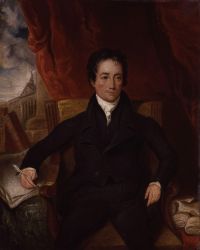
Portrait of Charles Lamb Charles Lamb Tales from Shakespeare

Antipholus of Syracuse married the fair Luciana, the sister of his brother's wife; and the good old Aegeon, with his wife and sons, lived at Ephesus many years. Nor did the unravelling of these perplexities so entirely remove every ground of mistake for the future, but that sometimes, to remind them of adventures past, comical blunders would happen, and the one Antipholus, and the one Dromio, be mistaken for the other, making altogether a pleasant and diverting Comedy of Errors.
Source: Gutenberg

Portrait of William Shakespeare William Shakespeare The Comedy of Errors

DROMIO OF EPHESUS.
And gentle master, I receiv’d no gold;
But I confess, sir, that we were lock’d out.
ADRIANA.
Dissembling villain, thou speak’st false in both.
ANTIPHOLUS OF EPHESUS.
Dissembling harlot, thou art false in all,
And art confederate with a damned pack
To make a loathsome abject scorn of me.
But with these nails I’ll pluck out these false eyes
That would behold in me this shameful sport.
[Enter three or four, and offer to bind him. He strives. ]
ADRIANA.
O, bind him, bind him; let him not come near me.
PINCH.
More company; the fiend is strong within him.
Source: Gutenberg

Get perspective with Kwize: daily news enlightened by great literature